Public health success story: digital screening in Costa Rica
Discover how a screening program in Costa Rica strengthened public health using technology, data, and automation. A replicable case for governments.
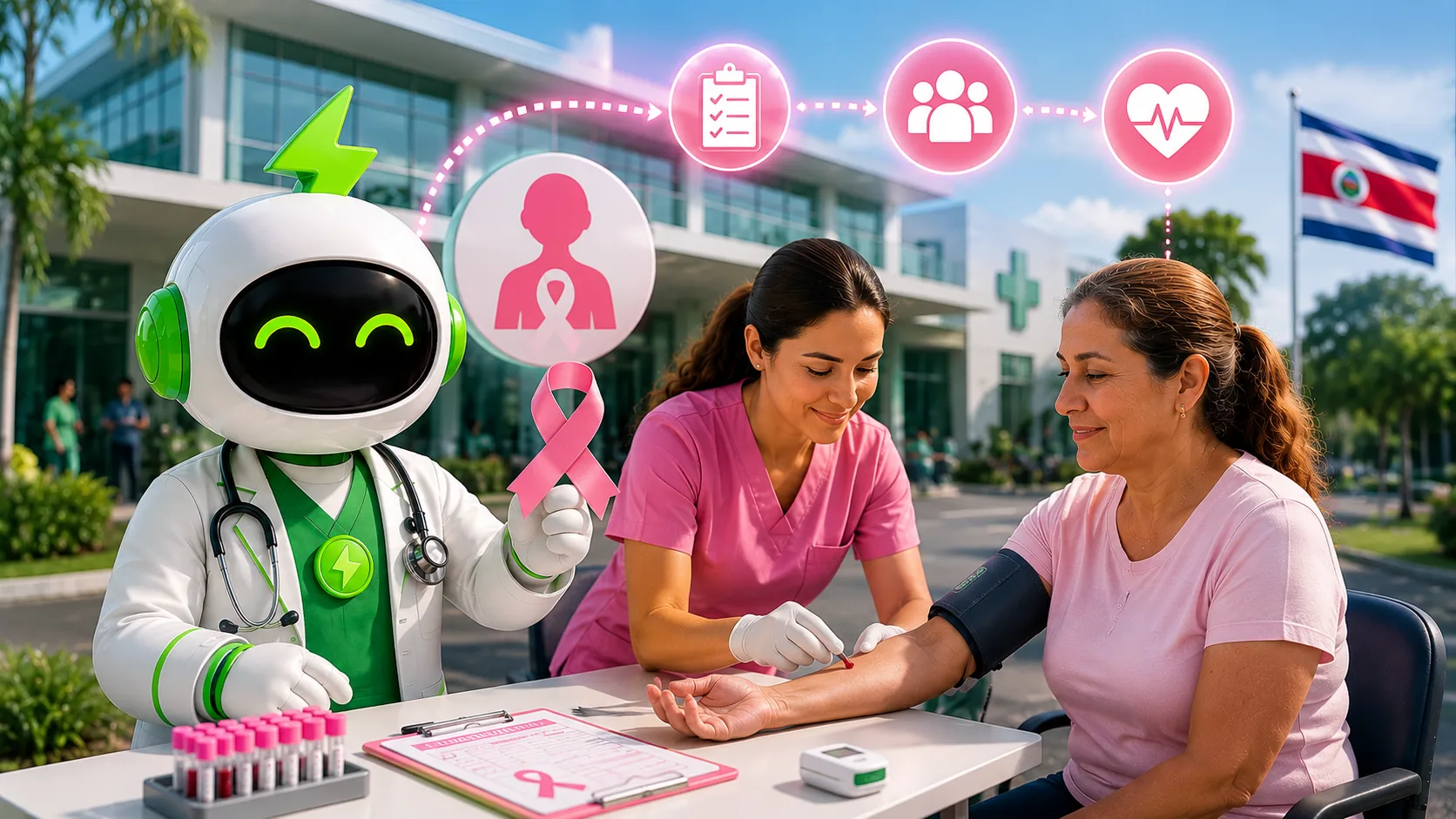
How technology strengthened a screening program in Costa Rica
Prevention and early detection are fundamental pillars of any public health system. However, many screening programs face operational barriers that limit their impact, including low coverage, missed appointments, manual processes, and limited data traceability.
In Costa Rica, a screening program at the primary care level demonstrated how the strategic implementation of technology can strengthen prevention efforts, optimize public resources, and improve timely access to health services. This case study stands out as a replicable model for governments and public institutions across the region.
The challenge: strengthening prevention with operational capacity
Before the technological implementation, the program faced challenges common in the public sector:
-
Difficulties in contacting and scheduling the target population
-
Recurring no-shows to scheduled appointments
-
High administrative burden on healthcare teams
-
Limited visibility into program performance
These barriers directly affected the effective coverage of screening and the system’s ability to act preventively.
The strategy: technology in service of public health
The project was designed with a clear institutional approach: to use technology to strengthen public prevention policy, not to replace it.
A digital platform was implemented to:
-
Automate appointment scheduling
-
Facilitate communication with the population through accessible channels
-
Reduce manual processes at the primary care level
-
Generate key information for decision-making
The model aligned with international best practices in public health and digital health, prioritizing efficiency, equity, and scalability.
Implementation: institutional coordination and progressive adoption
Execution was carried out collaboratively among technical, operational, and management teams, integrating seamlessly into existing health system workflows.
Ongoing support during implementation enabled progressive adoption, reduced operational friction, and strengthened ownership of the tool among healthcare personnel.
Results: measurable impact on public health
Following implementation, the program showed clear improvements:
-
Increased screening program coverage
-
Reduced missed appointments
-
Optimized use of healthcare staff time
-
Greater process traceability and control
These results strengthened the system’s capacity to deliver early detection and timely access, key elements of population-level prevention strategies.
A replicable model for governments
This Costa Rica case demonstrates that when technology is implemented with an institutional focus, it can become a strategic enabler for public health programs.
The model is adaptable to other prevention programs, territories, and contexts, especially for health systems seeking to strengthen primary care and data-driven decision-making.
Explore the complete case study
This article provides an overview of the project.
To learn more about the methodology, indicators, technological approach, and full results of the Costa Rica case study, visit the official landing page:
👉 View the complete case study
https://cocotech.ai/en/blog/public-health-success-story-digital-screening-costa-rica
Costa Rica’s experience confirms that investing in technology for prevention not only improves processes, but also strengthens public health and the efficient use of public resources.
What problem does Public health success story: digital screening in Costa Rica address?
How can it be applied in a clinic, hospital, or healthcare provider?
Which indicators should healthcare leaders track?
Do you want to activate patients and recover capacity?
See how COCO helps reach patients, fill available slots, and support continuity of care.
COCO in the press
What independent media have published on this topic.
- InfobaeHow AI and automation will transform clinics and hospitals in 2026
- Noticias RCNTrends that will transform clinics and hospitals in 2026
- El ColombianoCOCO Tecnologías brings its AI to Costa Rica for cervical cancer prevention
- Blu RadioColombian AI technology reaches Costa Rica to prevent women's cancer
Related articles

Prepayment Before the Appointment: Effect on No-Shows
Charging before the visit works as a confirmation signal: what changes in no-shows, front-desk time and patient experience.

Healthcare data privacy and AI: automating without losing trust
Trust is part of the operation, healthcare automation cannot scale if patient data is not protected. A poorly segmented campaign, exposed clinical data or an integration without traceability affects more than efficiency. It affects trust.

917,000 Missed Medical Appointments in Peru: The Hidden Cost Draining Private Clinics
In Peru, over 917,000 medical appointments are lost every year, none reassigned. Learn how much no show rates are costing your institution and how AI can recover those revenues.