Digital Transformation in Healthcare: COCO Tech AI Facing the Operational Impact of Decree 0182 of 2026
"Revolutionizing healthcare with COCO Tech AI: Navigating Decree 0182's operational impact"

Short answer: A healthcare provider should verify the current scope of Decree 0182 of 2026 through official sources before projecting enrollee transfers. Then review territorial populations, insurer contracts, treatment continuity, and capacity by service. Medical scheduling software can support appointment coordination, but it does not replace regulatory verification or guarantee additional clinical capacity.
The Colombian health system is at a critical turning point. With the implementation of Decree 0182 of 2026, the National Government has initiated a massive territorial reorganization that redefines how health insurance companies (EPS) operate in 1,102 municipalities. This regulatory change implies that in more than 500 locations, specific entities like Nueva EPS will assume exclusive coverage, leading to the transfer of approximately 6.6 million affiliates.
For hospitals and health service providers (IPS), this massive flow of patients represents an unprecedented logistical challenge. This is where COCO Tech AI technology positions itself as a vital solution to avoid operational collapse through Artificial Intelligence applied to patient scheduling.
Optimizing Capacity: Attending to 30% More Patients
The major bottleneck in the current system is the scarcity of available appointments and the saturation of care lines, barriers that 27% of patients identify as the main obstacle to healthcare access. According to Robert Parada, CEO of COCO, a clinic implementing their software can attend to 30% more patients per month.
This efficiency is transformative: for every three health centers that adopt this technology, the equivalent capacity of a new virtual clinic is created. In the context of the new decree, this responsiveness is essential for hospitals receiving a sudden migration of patients.
Interoperability and Security: Modernizing Health Data
Modernizing the health sector requires more than just speed; it requires standardized and secure data. COCO Tech AI ensures effective system integration through the use of the international HL7 FHIR standard, allowing clinical information to flow securely and transparently between different health platforms.
This technological infrastructure provides tangible benefits:
Drastic reduction in absenteeism: Achieving attendance rates above 90% through proactive WhatsApp reminders.
Operational efficiency: A demonstrated reduction of up to 40% in administrative costs related to appointment management.
Real-time synchronization: Matching medical schedules with user demand in less than three minutes.
Social Impact: Saving Lives Through Early Diagnosis
The impact of COCO Tech AI goes beyond administrative efficiency. In international collaborations, such as with the UNFPA in Costa Rica, the platform was fundamental in the prevention of cervical cancer, achieving a 40% increase in screening appointments. By automating proactive outreach, at-risk patients are identified, accelerating life-saving diagnoses.
Global Recognition and Future Vision
COCO's commitment to excellence has led it to be recognized by world-class institutions. Stanford University selected the company for its business scaling program (LBAN), validating its potential as a leading digital health innovator in Latin America. Additionally, it is the first Colombian company to join the Barcelona Health Hub (BHH), a prestigious European technological association.
In a time when Decree 0182 generates uncertainty in service continuity, COCO Tech AI offers the stability and efficiency that hospitals and patients need to guarantee the fundamental right to health.
Is your institution ready for the new demand?
Explore how COCO Tech AI can transform your operation today.
What problem does Digital Transformation in Healthcare: COCO Tech AI Facing the Operational Impact of Decree 0182 of 2026 address?
How can it be applied in a clinic, hospital, or healthcare provider?
Which indicators should healthcare leaders track?
Do you want to optimize medical scheduling?
See how COCO helps automate access, confirm appointments, and reduce operational workload.
Frequently asked questions
How can the decree's current scope be verified?
Consult the text published in Colombia's Diario Oficial and compare it with publications from the Ministry of Health and the National Health Superintendency. Check effective dates, territorial scope, transitional provisions, and any amendments or court decisions. Record the consultation date and have legal counsel validate the interpretation; a news report alone cannot establish obligations or confirm actual transfers.
Which enrollee transfer scenarios should a provider model?
Model a baseline with no confirmed changes, gradual arrivals, and demand concentrated in specific services or municipalities. Use available official population data and communications, clearly separating assumptions from confirmed facts. Estimate consultations, pending follow-ups, authorizations, and continuity needs by insurer. Do not equate transferred enrollees with appointments: account for historical utilization, contracted networks, and clinical profiles.
How can capacity be prepared for insurer changes?
Compare projected demand with available appointments, staff, consulting rooms, and diagnostic capacity by location and specialty. Identify treatments that must continue without interruption and confirm authorization pathways and contracting arrangements with each insurer. When evaluating AI scheduling, assess integration with existing systems, data protection, traceability, and confirmation management. Administrative automation does not replace clinical staff or infrastructure.
Which territorial data should leadership review?
Review enrollment by municipality and insurer, age distribution, clinical needs, historical utilization, registered service capacity, and contracted networks. Include travel times, rural access barriers, referrals, and pending demand by location. Compare official sources, such as ADRES enrollment information and Colombia's provider registry, REPS, with internal records. Document reporting dates, coverage, and data quality to avoid combining incompatible populations or periods.
COCO in the press
What independent media have published on this topic.
Related articles

Healthcare data privacy and AI: automating without losing trust
Trust is part of the operation, healthcare automation cannot scale if patient data is not protected. A poorly segmented campaign, exposed clinical data or an integration without traceability affects more than efficiency. It affects trust.
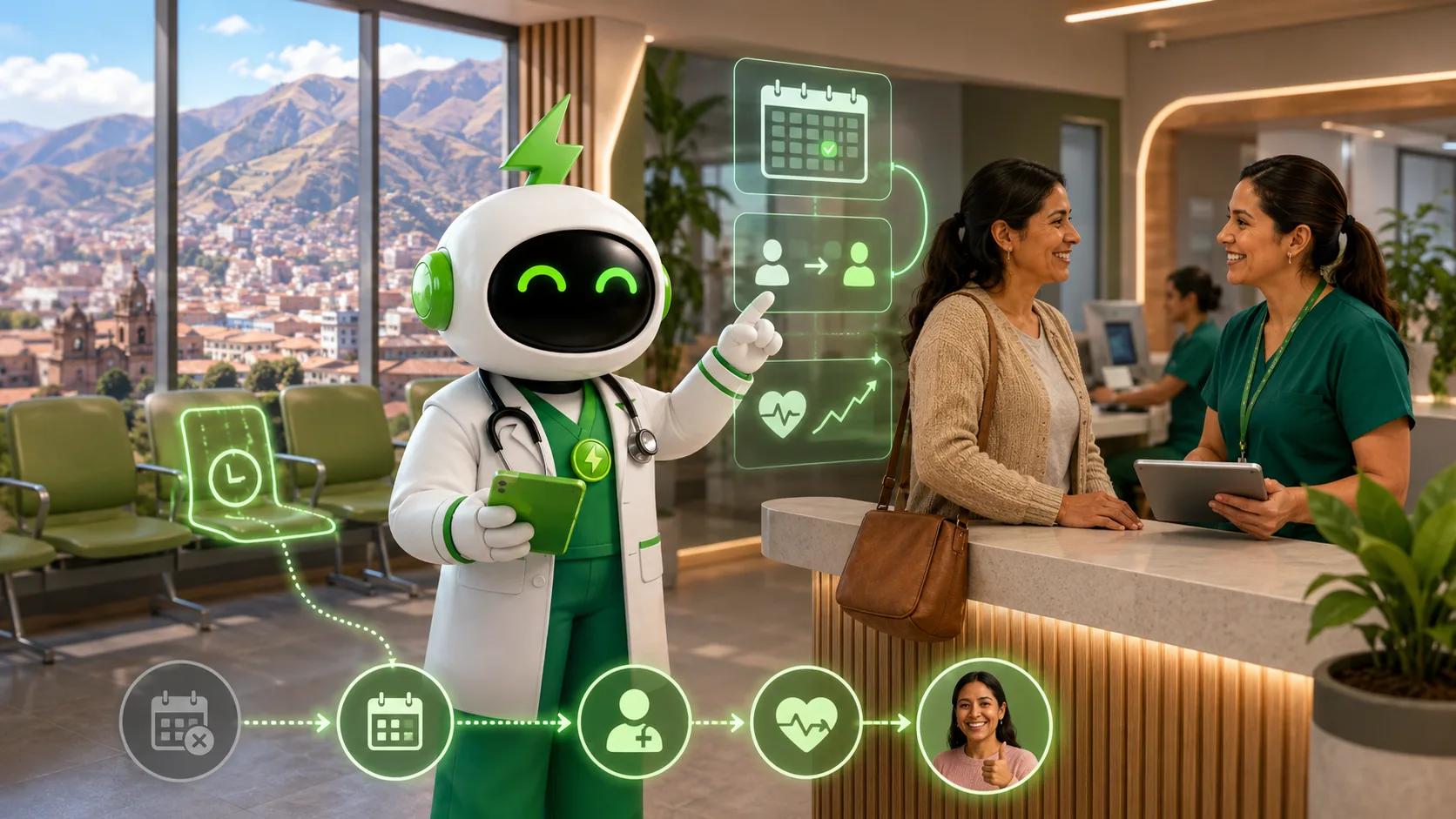
917,000 Missed Medical Appointments in Peru: The Hidden Cost Draining Private Clinics
EsSalud reported over 917,000 lost scheduled appointments between January and July 2025. Explore the impact of no-shows without extrapolating an annual total or promising guaranteed returns.
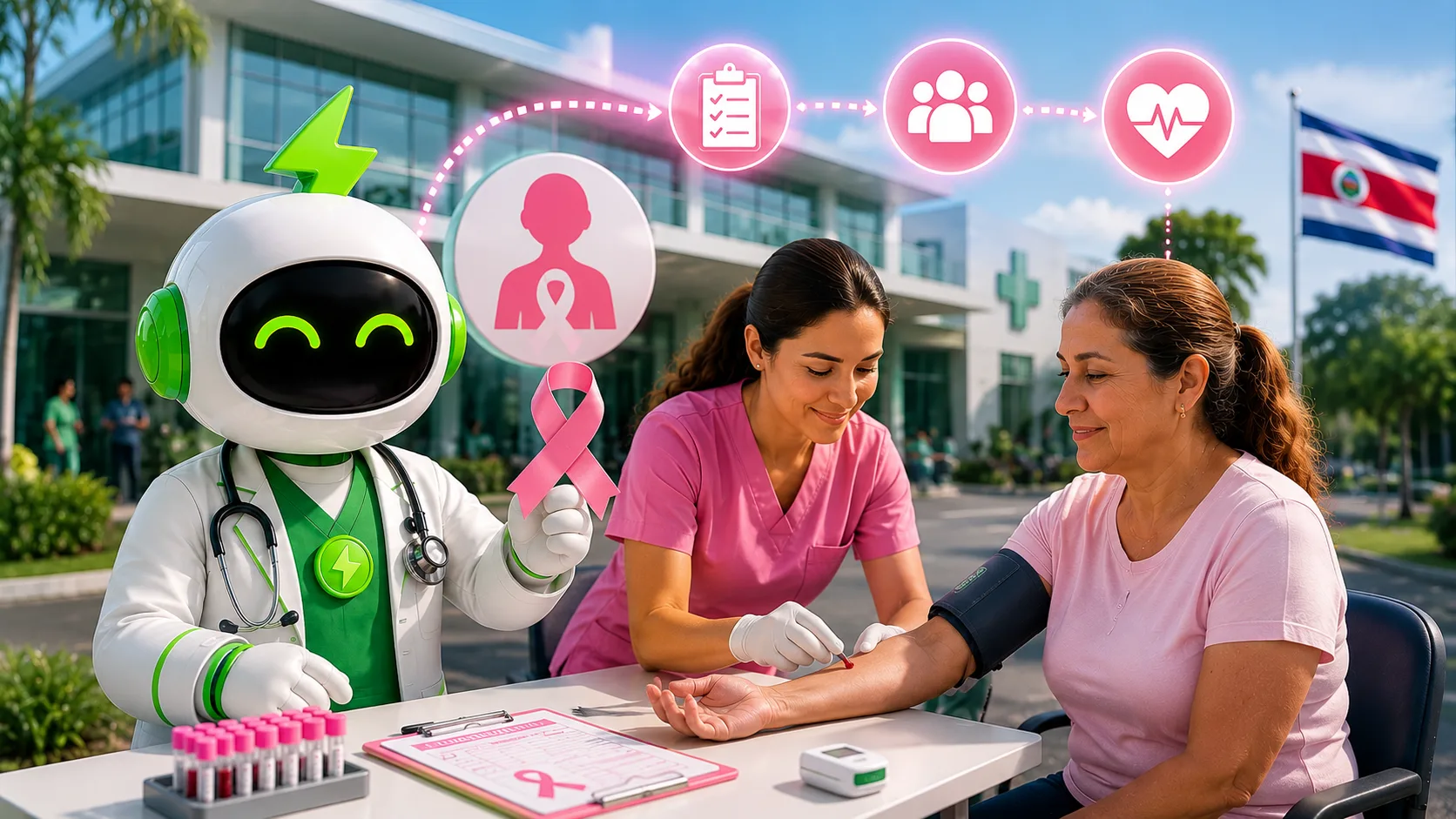
Public health success story: digital screening in Costa Rica
Discover how a screening program in Costa Rica strengthened public health using technology, data, and automation. A replicable case for governments.