Voicebot for clinics and hospitals: what it is and how it takes the load off the call center
A voicebot is an AI voice assistant that calls patients to confirm, remind and reschedule appointments, and hands off to a person anything that needs judgment. It does not replace the chatbot or the IVR: it reaches the patient who ignores messages but does answer the phone. It only works well if it reads and writes the clinic's real schedule, in the scheduling system or in the HIS.
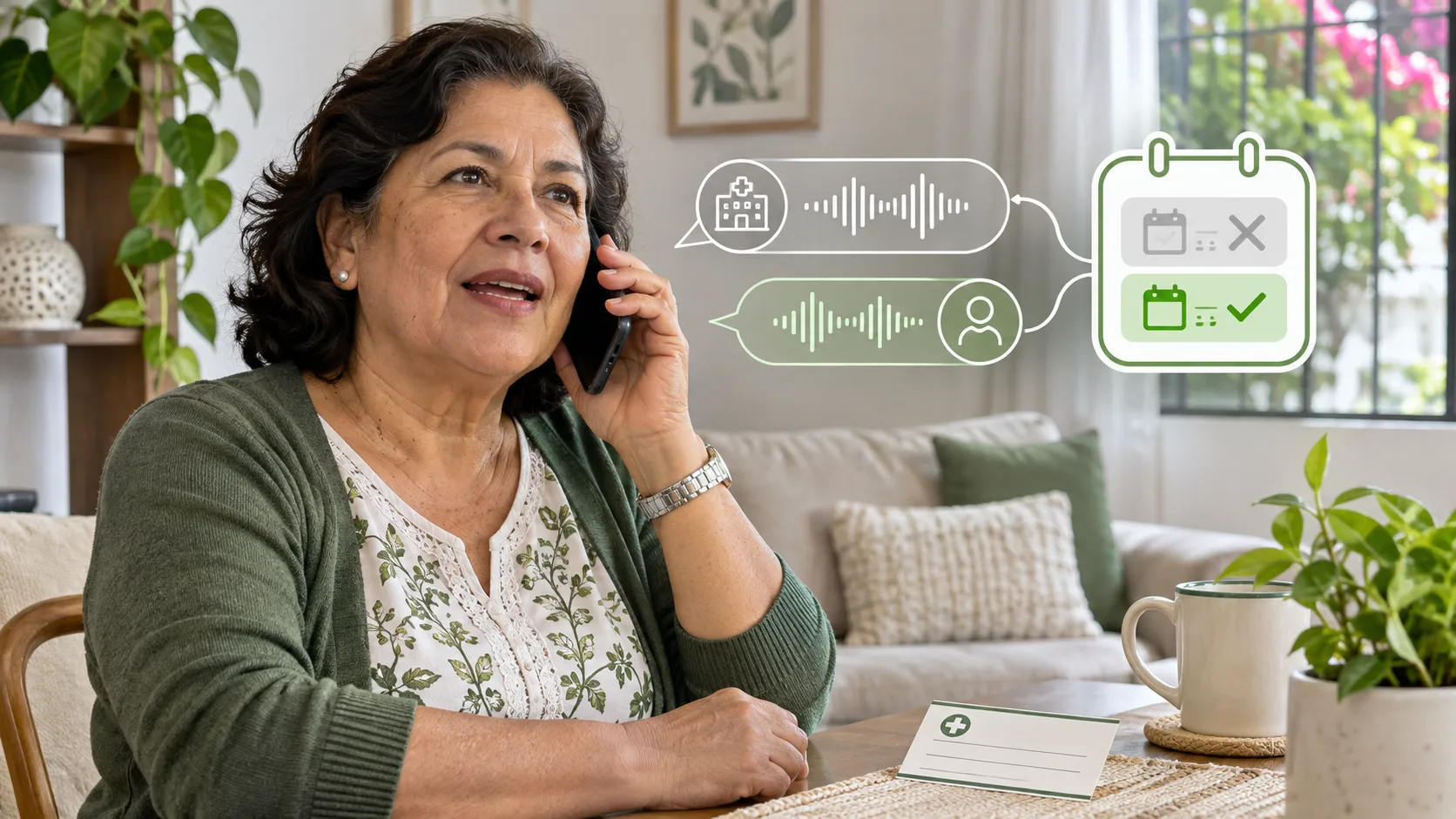
Anyone who has spent a morning in a clinic's call center knows the scene. Four people with headsets, a list of 300 appointments to confirm for tomorrow and, between calls, patients asking about their referral or a change of time. By 11 a.m. the list is half done. At 3 p.m. someone cancels a 4 p.m. appointment and there is no time left to offer it to anyone.
That is the point at which many institutions start asking about a voicebot.
What is a voicebot in healthcare?
A voicebot for clinics and hospitals is an AI voice assistant that calls patients for the repetitive tasks of the schedule: confirming appointments, reminding them of follow-ups, rescheduling cancellations and offering freed-up slots. It talks with the patient in natural language, records the answer in the scheduling system and transfers the call to an agent when the case requires it.
The difference from a recorded message is that it listens. If the patient says "I can't make it on Tuesday, is there anything on Thursday?", the voicebot checks the schedule and offers options.
How is it different from a chatbot and an IVR?
It is the most common confusion, and it is worth clearing up before evaluating vendors.
Tool | How it works | What it is for in a clinic |
|---|---|---|
Traditional IVR | Keypad menu ("press 1") | Routing the call to the right area |
Automated call | The platform dials the patient and delivers a message about the appointment, with no open conversation | Reminding and confirming appointments at high volume |
Chatbot | Text conversation on WhatsApp or the web | Booking and answering questions when the patient writes |
Voicebot | Voice conversation, inbound or outbound, in natural language | Confirming, reminding and rescheduling by phone when the patient needs to talk |
They do not compete with each other. Each patient responds best on one channel: some answer a WhatsApp message in seconds and others never open it but pick up the phone on the first ring. The voicebot exists for that second group, which may include older patients or patients in chronic care programs. It is worth checking this against your own institution's contact data.
If what you are evaluating is how to handle incoming calls better, with an IVR that understands natural language, we explain it in medical call center productivity. Here we focus on the voicebot and on the calls the clinic makes to the patient.
Which tasks can it take on?
The ones that take up the call center's day today and repeat the same way with every patient. Confirming attendance the day before and updating the schedule with the answer. Reminding a patient in follow-up that their check-up is coming up. Offering another time when someone cannot attend. And, when a slot opens up, calling patients on the waitlist until someone takes it.
What it should not do matters as much as what it does. A clinical question, a complaint or a patient with a special condition always goes to a person, with the context of the conversation so the patient does not have to repeat everything. That way the human team stops handling volume and focuses on the exceptions.
When is it worth implementing?
Not every clinic needs one. It makes sense when the call center spends much of the day confirming and rescheduling, when many patients do not respond on WhatsApp or SMS, and when no-shows are high in certain specialties or time slots.
There is one non-negotiable condition: the voicebot has to read and write the real schedule, in the scheduling system or in the HIS. If it is not integrated, it only takes messages, and someone on the team ends up entering every answer by hand. It is the most expensive mistake in this kind of project.
What to ask a voicebot vendor:
Does it read and write to my HIS or scheduling system in real time, or does it only take messages? Through which standards (HL7, FHIR, API)?
Does it follow each insurer's or payer's rules when offering a slot?
Does it work with several sites and several schedules at once?
When and how does it transfer the call to a person, and with what context?
How does it record the patient's consent to the processing of their data in each country where I operate?
Which indicators does it provide from the first month?
A case published by COCO shows why it matters that the channels are connected to the schedule. In a cancer screening program run by a public health system in Central America, more than 17,000 appointments were managed over 12 months: 81.8% of patients were contacted without human intervention, 72.3% managed their appointment on the web or WhatsApp, and effective attendance reached 71% (see the case). These are results of multichannel scheduling and self-scheduling, not of a voicebot's performance, but they show what can be achieved when every channel writes to the same schedule.
How do you implement it without hurting the patient experience?
Start with a single use, usually appointment confirmation, and measure before expanding. Write short scripts, with one question per step and the option to speak to a person at any time. Define from the start which cases are always escalated.
Each country in the region regulates the processing of personal data, including health data: in Colombia, Ley 1581 de 2012; in Peru, Ley 29733; in Panama, Ley 81 de 2019; in Costa Rica, Ley 8968; and in Chile, Ley 21.719. A voicebot does not change those obligations: it makes them more visible. Before turning on automated calls, check with your legal team which patient consent you need in each country where you operate.
And measure from the first month: contact rate, confirmed appointments, refilled slots and the share of calls that end with an agent.
How does COCO approach it?
At COCO, appointment confirmation contacts the patient by WhatsApp, SMS, email and automated dial-out call, and works on the same schedule as the medical scheduling software.
It is worth not confusing three functions: the automated dial-out call, which is what COCO uses to confirm; connecting the clinic's IVR through an API; and a voicebot, which talks in natural language and is the tool this guide describes.
On WhatsApp, Bot 2.0 lets patients book, cancel and confirm 24 hours a day, and transfers to an agent when needed. In 2025 it managed 1,496,997 appointments, with 99.8% monthly availability and less than 0.05% failed appointments.
The software does not replace the electronic health record: it complements it. It integrates with the systems the institution already uses through HL7, FHIR and API. The list of systems it already connects with is on the medical scheduling software page.
"Since we implemented COCO, appointment coordination has become much more efficient," says Gina Roa, coordinator at Clínica La Misericordia.
If the underlying goal is for patients to show up to their appointments, also see how to reduce medical appointment no-shows.
Frequently asked questions
What is a voicebot in healthcare?
What is the difference between a voicebot and a chatbot?
Does a voicebot replace the call center?
Does a voicebot connect with the clinic's HIS?
When is a voicebot better than an automated call?
Can I add a voicebot or an automated call to my current HIS and IVR?
Is it legal to use a voicebot with patients in Latin America?
How much does a voicebot cost?
What do you need to implement one?
How do I know it is working?
If you want to see how it would work with your schedule,
COCO in the press
What independent media have published on this topic.
Related articles
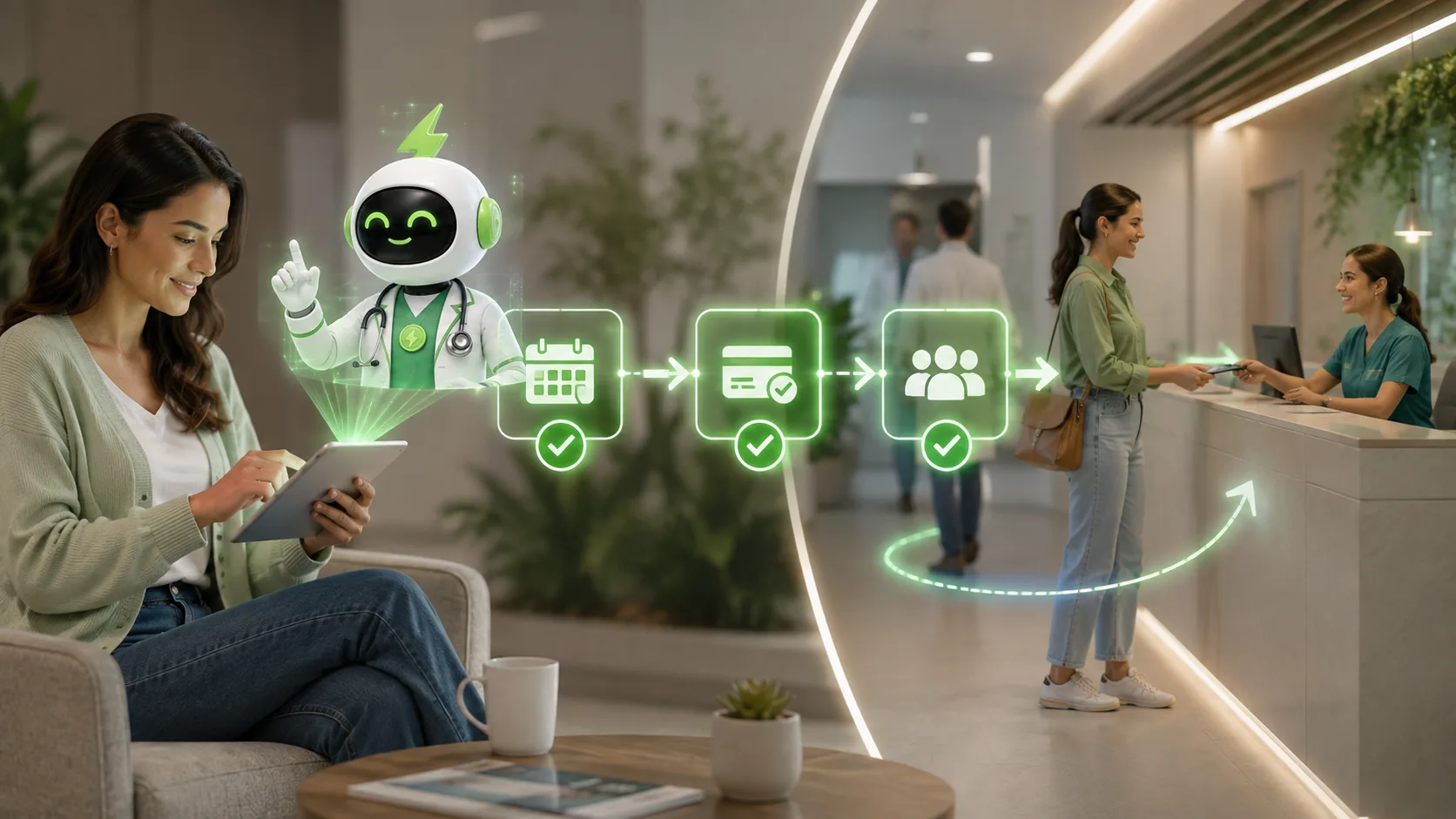
From Scheduling to Revenue: How COCO Pay Organizes Healthcare Collections
A guide for clinics and healthcare providers that want to connect scheduling, payment, confirmation, and reconciliation without adding administrative workload.
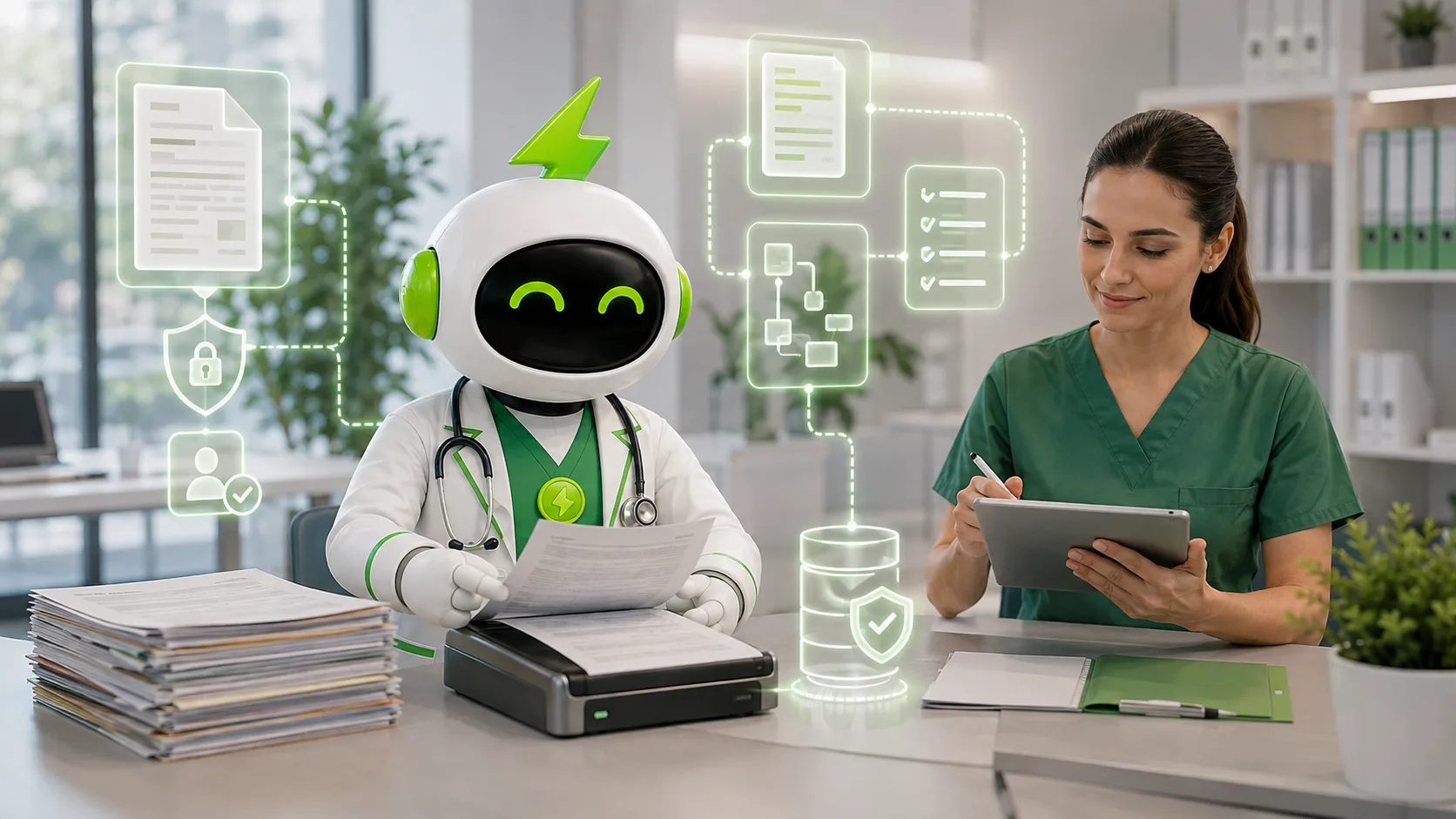
Health Data Privacy in Clinical OCR: Controls and Governance
Access rules, traceability, human review and governance: how to keep health data protected when documents pass through OCR and AI.
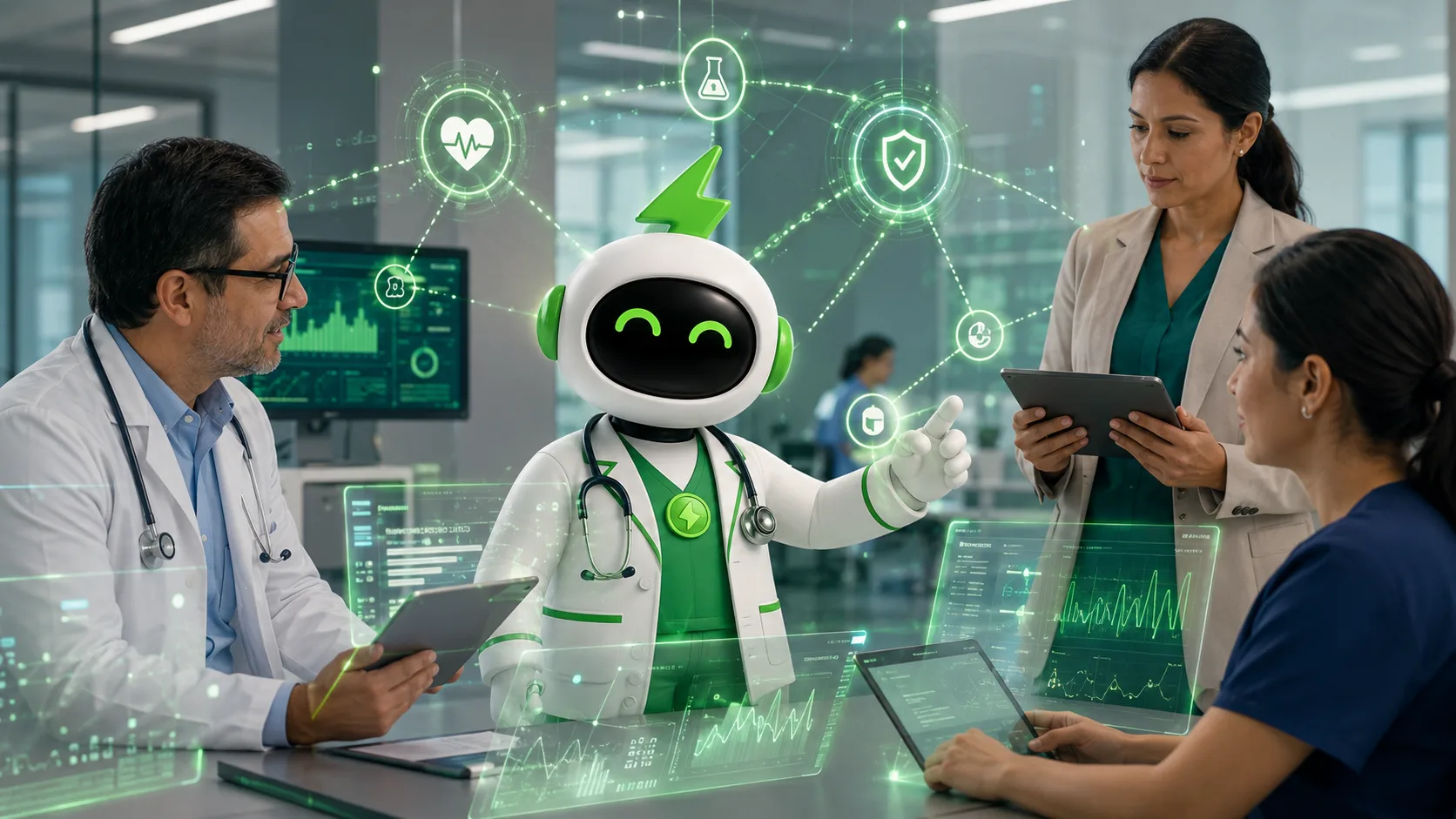
Clinical interoperability in LATAM: connecting scheduling, OCR and operations without adding friction
Interoperability is no longer just a technical project. It is an operational need. In healthcare, every minute lost between systems affects care. An unconfirmed appointment, an order waiting for manual validation or a schedule that does not update in time creates friction for patients and revenue leakage for providers.