From Scheduling to Care: How to Improve Patient Flow
Learn how to connect scheduling, confirmation, waiting, and care to reduce friction and improve patient flow.
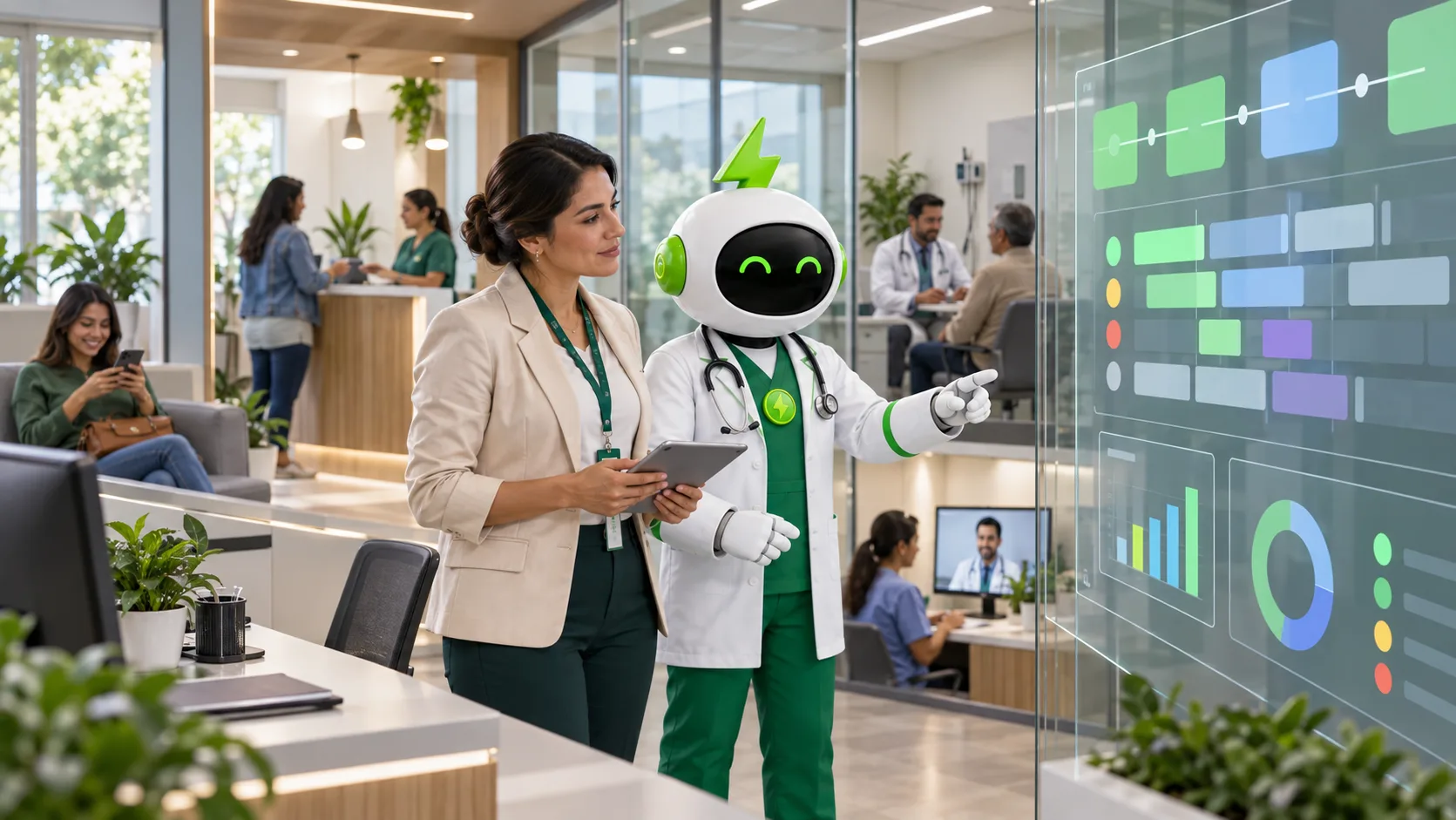
Short answer: Redesign the journey by connecting appointment requests, availability, confirmation, preparation, arrival, and care. Identify drop-offs and duplicate tasks, then define shared information and ownership for every handoff. Evaluate medical scheduling software against those workflow requirements. Test the redesigned journey with patients and staff, comparing waiting times, no-shows, and repeated requests against a baseline before expanding it.
Patient flow does not start in the waiting room. It starts when someone tries to find a service and continues until care is delivered, a payment is completed, an appointment is rescheduled, or follow-up is needed.
When each stage operates separately, an organization can have a full schedule and still experience lines, repeated calls, empty slots, and patients who abandon the journey. Improving flow requires connecting those moments.
Move every stage of the patient journey forward
COCO connects access, communication, capacity, and follow-up for healthcare organizations.
Friction accumulates before the visit
- Patients cannot find availability through the channel they use.
- Confirmation depends on a manual call.
- A cancellation never reaches the waitlist.
- Teams lack context when a patient changes an appointment.
- Document or order information must be entered repeatedly.
- Patients arrive without clarity about the next step.
Each friction may seem small, but together they affect access, satisfaction, and utilized capacity. Flow should therefore be viewed as a complete sequence rather than a collection of tools.
A connected flow has five moments
1. Discovery and request
People need a simple path to find a service, site, professional, and availability. AI medical scheduling helps organize the request and provide a clear response.
2. Confirmation and preparation
Confirmation should allow patients to respond, change the appointment, and receive useful information. Digital channels reduce call-center dependence and make each appointment status visible.
3. Capacity recovery
When a slot opens, the automated waitlist can connect that availability with someone waiting. A cancellation no longer has to be the end of the process.
4. Arrival and care
The waiting-room queue system helps organize calling and give visibility into in-person flow. The goal is not just assigning a number, but reducing uncertainty and admissions workload.
5. Continuity and follow-up
Telemedicine, Clinical OCR, surgical management, and COCO Pay can participate when the journey requires remote care, document validation, surgical coordination, or payment confirmation.
How to prioritize improvements
- Measure where the greatest waiting time accumulates.
- Identify tasks repeated across channels and teams.
- Choose a service with visible access or capacity impact.
- Connect one automation and observe the change.
- Expand the improvement when the outcome is verifiable.
AHRQ highlights the importance of process improvement and coordination for patient safety and experience. In healthcare, a clearer flow helps teams understand what is happening and prevents patients from solving the same need repeatedly.
What leadership should monitor
Alongside satisfaction, organizations should review appointment availability, confirmations, no-shows, recovered slots, in-person waiting time, repeated requests, and call-center workload. These measures show whether an improvement is moving operations or simply changing the channel.
COCO helps turn that view into configurable and measurable journeys. The goal is helping organizations serve patients better with the capacity they already have and giving patients a clear next step at every stage.
The full journey can also be measured
Improving patient flow requires observing what happens between the request and the visit. The Hospital San Juan de Dios E.S.E. Rionegro case reports more than 121,000 managed appointments, 98% AI effectiveness, and a reduction in no-shows from 17.4% to 12%. It is a useful reference because it connects access, communication, and capacity utilization.
In practice, a clinic can start with one journey: appointment request, availability, confirmation, arrival, care, and follow-up. Each stage should have an owner, a status, and a metric. When friction appears, the institution can decide whether it needs automation, a business rule, a waitlist, or human intervention.
Questions that help prioritize improvements
- Where does the patient abandon the process?
- How long passes between the request and confirmation?
- What happens to released slots?
- What information does the team need to act without checking several tools?
COCO can support this journey with scheduling, an automated waitlist, waiting-room queue management, telemedicine, and operational reporting, based on each institution’s needs.
What does improving patient flow mean?
Where should a clinic start?
Which COCO solutions participate in patient flow?
Frequently asked questions
How can journey abandonment points be mapped?
Map each stage from appointment request to care, recording entries, progress, cancellations, and unresolved requests. Compare appointment statuses with contact records and patient feedback. Distinguish abandonment from rescheduling and requests still awaiting action. Break findings down by service and channel, then prioritize handoffs where continuity is lost or patients repeatedly contact the clinic.
What information should pass from access teams to admissions?
Define a minimum dataset: patient identification, contact details, requested service, location, clinician, appointment date, current status, changes, and instructions already sent. Include document or referral status when relevant, with an owner for outstanding items. Share only necessary information through authorized access so patients do not repeat details and admissions staff can act on recent changes.
How should ownership of each handoff be defined?
For every handoff, document the sending team, receiving team, required information, and conditions for moving forward. Assign an owner for unresolved items and an escalation route when documents, availability, or confirmation are missing. Record the transfer with a visible status: sending a message alone does not establish that the receiving team has what it needs to act.
How can the redesigned journey be validated with patients and staff?
Test the journey within one service, covering requests, rescheduling, cancellations, and arrivals with missing documents. Ask patients and staff to explain the next step, and observe where they need help or repeat information. Compare waiting times, no-shows, repeated requests, and operational workload against the baseline. Refine instructions and responsibilities before extending the design.
COCO in the press
What independent media have published on this topic.
- PortafolioSoftware scheduling 140,000+ medical appointments a month wins Ingenio 2025 Award
- Valora AnalitikColombian medical scheduling software wins award
- LatinPymeSoftware scheduling 140,000+ appointments a month wins Ingenio 2025
- Enter.coStanford recognizes COCO Tecnologías, the startup using AI for appointment access
Related articles

Multichannel Appointment Reminders: Building a Flow Patients Answer
A practical guide to multichannel appointment reminders that increase responses, reduce no-shows, and lower administrative workload.
Front-Desk Administrative Workload: What Automation Removes
A task-by-task look at the front desk: what automation absorbs, what stays human and how staff time is reused.

Induced Demand in Healthcare in Colombia: From Patient Lists to Completed Appointments
How patient activation works in Colombia: Health Benefit Plan list cleansing, omnichannel outreach, appointment scheduling, and patient-level traceability.