Digital Health in Panama 2026: How to Turn the National Strategy into Access and Cost Efficiency
Panama has a clear roadmap for digital health transformation. The challenge now is turning that strategy into effective care, shorter waiting lists, and better use of installed capacity. This is how operational technology can close that gap.

In March 2025, Panama’s Ministry of Health, in collaboration with the Pan American Health Organization and the World Health Organization, launched the National Strategy for the Digital Transformation of the Health Sector in Panama, an initiative designed to strengthen the health system through the integration of information and communication technologies, improving access, quality, and timeliness of services for the Panamanian population.
This is a public policy with six strategic pillars, a roadmap, and a monitoring framework. Its central purpose is clearly captured by the Ministry itself: that every citizen, regardless of location or condition, should have access to timely, quality healthcare services.
2026 is the year this strategy moves from launch to execution. It is the year when the most important question stops being, “What do we want to achieve?” and becomes, “How do we turn this into effective care for the patient waiting for an appointment?”
What Panama is prioritizing in digital health
The strategy aims to reduce unequal access to healthcare services, improve the management of multiple epidemiological profiles, and optimize human and budgetary resources. Through digitization, the country expects to expand coverage, especially in remote areas, and improve response to public health emergencies.
Three priorities capture most of the operational focus:
-
Telemedicine as a structural channel, not an experiment: The strategy positions telemedicine as a mechanism to bring specialized care closer to hard-to-reach communities, reducing the need for physical travel, which in many rural and Indigenous areas is prohibitively expensive for families.
-
Interoperability of clinical records: The goal is for patient information to be available quickly, securely, and in up-to-date form for healthcare professionals, regardless of where care is delivered. That requires information systems to talk to one another, rather than each institution operating as a separate technology island.
-
Extending coverage in remote territories: The digital transformation project for coverage expansion in Veraguas, supported by the Inter-American Development Bank, aims to bring comprehensive care to more than 37,500 people across 560 rural and Indigenous communities, with a focus on early identification of patients with hypertension, diabetes, cervical lesions, and maternal and child health needs.
The operational challenges the strategy cannot solve on its own
A digital health transformation strategy can clearly define where the system wants to go. What it cannot do by itself is resolve the day-to-day operational bottlenecks within healthcare institutions.
In Panama, several of those bottlenecks are well known and documented.
-
Waiting lists and surgical backlogs: In regions such as Veraguas, official Ministry of Health data shows surgical waiting lists stretching for months, with documented delays in specialties such as general surgery, ophthalmology, neurosurgery, and otorhinolaryngology. This is not only a regional problem, but its presence in official documents confirms that the access and scheduling bottleneck is real and persistent within the system.
-
No-shows and wasted slots: When patients do not attend their appointments and cancelled slots are not recovered in time, installed capacity is not performing at the level it could. This is a patient access management problem, not an infrastructure problem.
-
Chronic patient follow-up: With hypertension, diabetes, and other chronic diseases explicitly identified as public health priorities, longitudinal patient management requires more than an electronic record. It requires active outreach, reminders, and reactivation workflows that traditional systems do not usually automate.
-
Administrative workload in appointment coordination: In many institutions, a significant share of administrative staff time is consumed by manual confirmation calls, cancellation recovery, and availability management tasks that do not require human intervention at every step.
Digital transformation may be advancing at the level of policy and platform. But between the policy and the patient who actually receives care, there is an operational layer that often makes all the difference.
Why digitizing is not enough if operations do not improve
Having an electronic health record does not reduce the waiting list. Having telemedicine available does not guarantee that the patient will actually attend the consultation. Having interoperable systems does not ensure that empty slots will be recovered before they are lost.
Digitization is a necessary condition, but not a sufficient one, to improve access. What complements it is the active management of patient flow:
-
How appointments are booked.
-
How they are confirmed.
-
How a cancelled slot is recovered.
-
How a patient who dropped off is reactivated.
-
And how the waiting list is prioritized when availability opens up.
This is where operational technology, not the medical record, not the infrastructure, but the patient access management layer, produces measurable results in occupancy, no-shows, and continuity of care.
How can we contribute to Panama’s digital health path?
At COCO, we have spent more than 8 years working with healthcare institutions in seven Latin American countries to close exactly that gap: turning installed capacity into effective care.
We are not an electronic medical record system, and we are not a replacement for the HIS. We are an operational layer that integrates with the systems an institution already has, respecting its infrastructure, its processes, and its governance model, while improving the access, efficiency, and sustainability indicators that matter most.
The connection with Panama’s priorities is direct across several fronts:
-
Timely access: Omnichannel scheduling, automated confirmation with up to five attempts through WhatsApp, SMS, and AI-powered calls, real-time recovery of cancelled slots, and active waiting list management are the tools that turn the access priority into a measurable outcome. In institutions where we have implemented this model, no-shows have been reduced by more than 60%, and the rate of recovered appointments, cancelled slots that are rebooked before being lost, also exceeds 60%. The direct result is an increase in effective care capacity of more than 30%, without expanding infrastructure or staff.
-
Reduced operational workload and coordination costs: Automating access management does not only improve clinical indicators. It reduces coordination costs by more than 80% and lowers access-related complaints by more than 50%. For institutions operating under tight budgets, that kind of efficiency creates immediate and sustained value.
-
Preventive health campaigns and chronic care management: When the government prioritizes hypertension, diabetes, and maternal and child health, active patient follow-up becomes non-optional. Large-scale outreach campaigns to patient databases reach contact rates above 55%, with conversion into booked appointments above 80% of contacted patients. That is what allows organizations to move from a reactive model to active population management, with traceability for every interaction.
-
Interoperability without replacing what already exists: The Ministry of Health places interoperability at the center of its strategy. At COCO, that logic is structural: we integrate with HIS, billing systems, and existing digital channels using APIs and standards such as HL7 FHIR, without forcing institutions to replace their current technology stack.
What the numbers say about operations
The indicators we produce in implemented institutions are not projections. They are measurements from live operations. On page 5, the table summarizes the following documented outcomes:
|
Indicator |
Documented result |
|
Reduction in coordination and access costs |
+ 80% |
|
Recovered appointments from cancelled slots |
+ 60% |
|
Increase in effective care capacity |
+ 30% |
|
Reduction in no-shows |
+ 60% |
|
Reduction in access-related complaints |
+ 50% |
|
Contactability in mass outreach campaigns |
+ 55% |
|
Conversion to booked appointments in campaigns |
+ 80% |
For an institution in Panama dealing with long waiting lists and slots lost to no-shows, these numbers represent installed capacity that is currently not producing care, but could do so without any additional investment in infrastructure.
What COCO can contribute to the Panamanian health system
Panama has something many systems in the region do not: a digital transformation strategy backed by institutions, aligned with PAHO, and supported by a concrete roadmap for 2025-2030. That is an advantage.
What is needed now are technology systems and experienced integrators that can support that strategy at the operational layer, systems that turn digitization into effective access, not just better-organized records.
That is where we work. And the Panamanian context of 2026, with its focus on interoperability, telemedicine, coverage expansion, and operational efficiency, is precisely the kind of environment where our value proposition generates measurable results.
What comes next?
Digital transformation in health in Panama is a serious and well-grounded effort. But the distance between the strategy and the patient who actually receives care is closed in operations:
-
In how each appointment is managed.
-
How each slot is recovered.
-
And how continuity is maintained for each patient.
If institutions in Panama want their digital health investment to translate into real access, continuity of care, and better use of installed capacity, they also need systems that work in that operational layer.
That is where we can contribute.
At COCO, we can show you how institutions with similar challenges have improved their access and operational indicators within the first implementation cycles.
What problem does Digital Health in Panama 2026: How to Turn the National Strategy into Access and Cost Efficiency address?
How can it be applied in a clinic, hospital, or healthcare provider?
Which indicators should healthcare leaders track?
Do you want to optimize medical scheduling?
See how COCO helps automate access, confirm appointments, and reduce operational workload.
COCO in the press
What independent media have published on this topic.
- El TiempoClinics and hospitals grew appointment management over 24% using AI
- Diario ADNIn Colombia, under 50% of hospitals offer digital scheduling and results
- InfobaeHow AI and automation will transform clinics and hospitals in 2026
- Noticias RCNTrends that will transform clinics and hospitals in 2026
Related articles
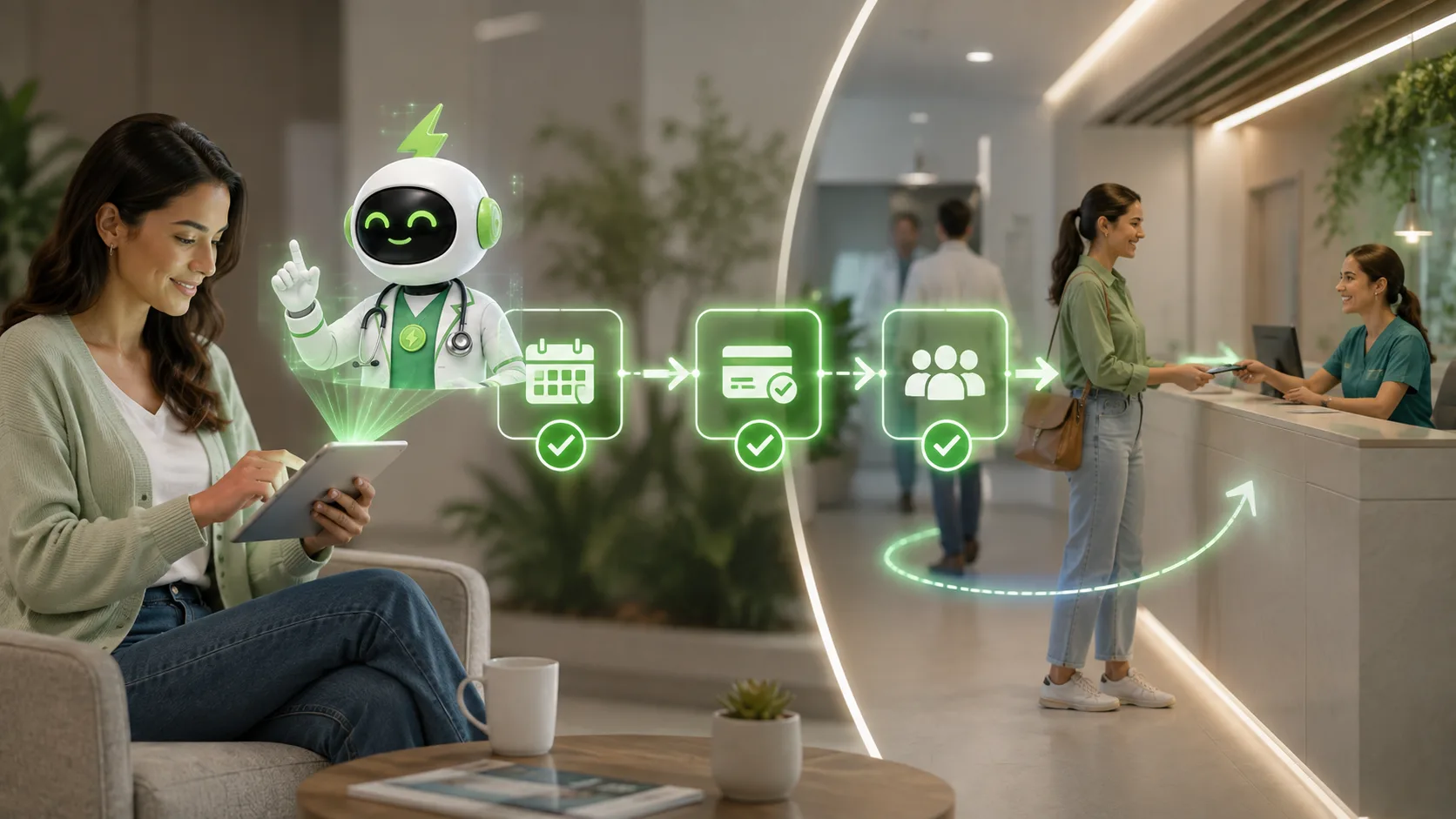
From Scheduling to Revenue: How COCO Pay Organizes Healthcare Collections
A guide for clinics and healthcare providers that want to connect scheduling, payment, confirmation, and reconciliation without adding administrative workload.

Health Data Privacy in Clinical OCR: Controls and Governance
Access rules, traceability, human review and governance: how to keep health data protected when documents pass through OCR and AI.
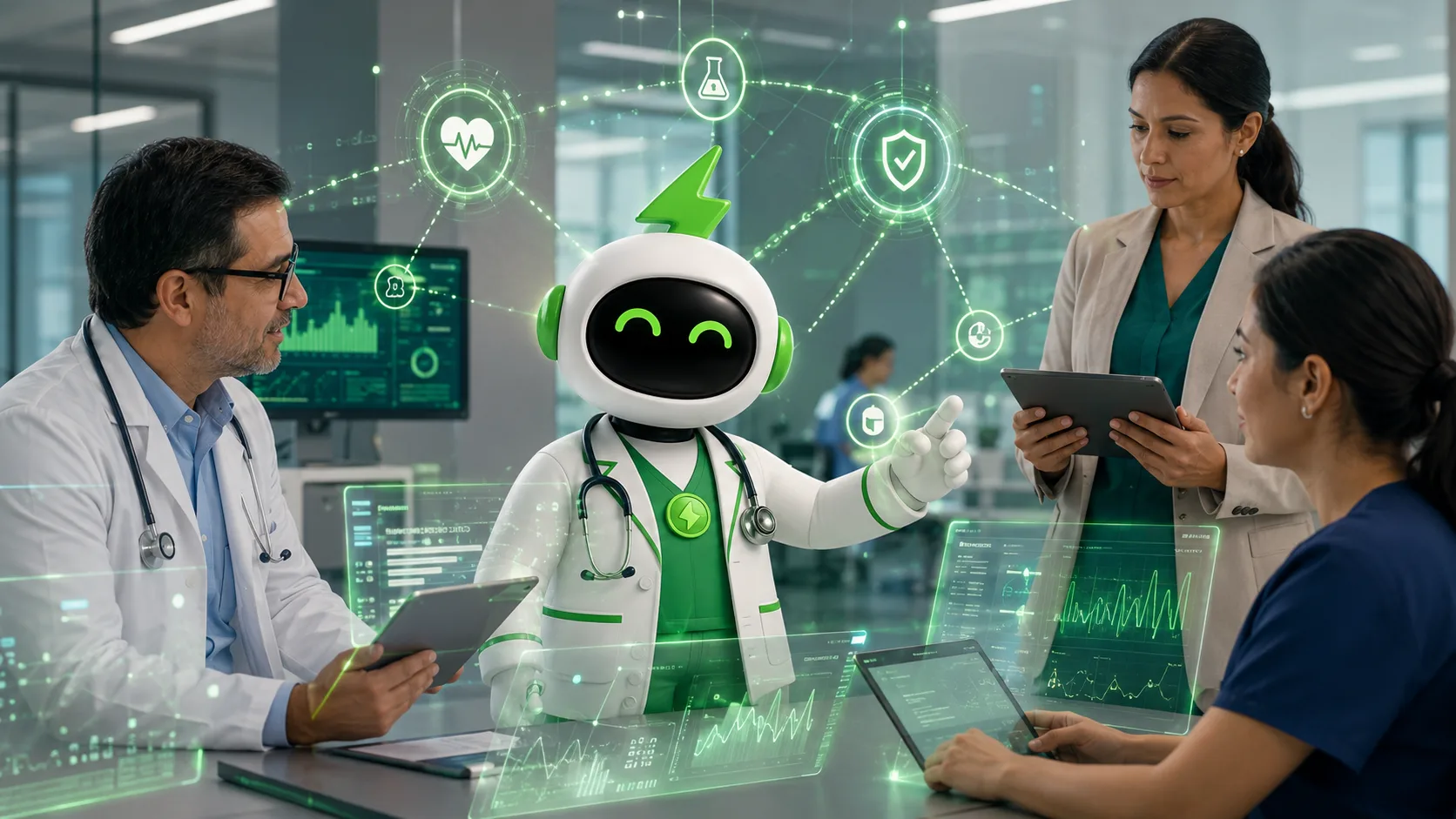
Clinical interoperability in LATAM: connecting scheduling, OCR and operations without adding friction
Interoperability is no longer just a technical project. It is an operational need. In healthcare, every minute lost between systems affects care. An unconfirmed appointment, an order waiting for manual validation or a schedule that does not update in time creates friction for patients and revenue leakage for providers.