Clinical OCR in Latin America: From Medical Documents to Operational Data
How to design a clinical OCR workflow that extracts document information, preserves context, and activates decisions in healthcare organizations.
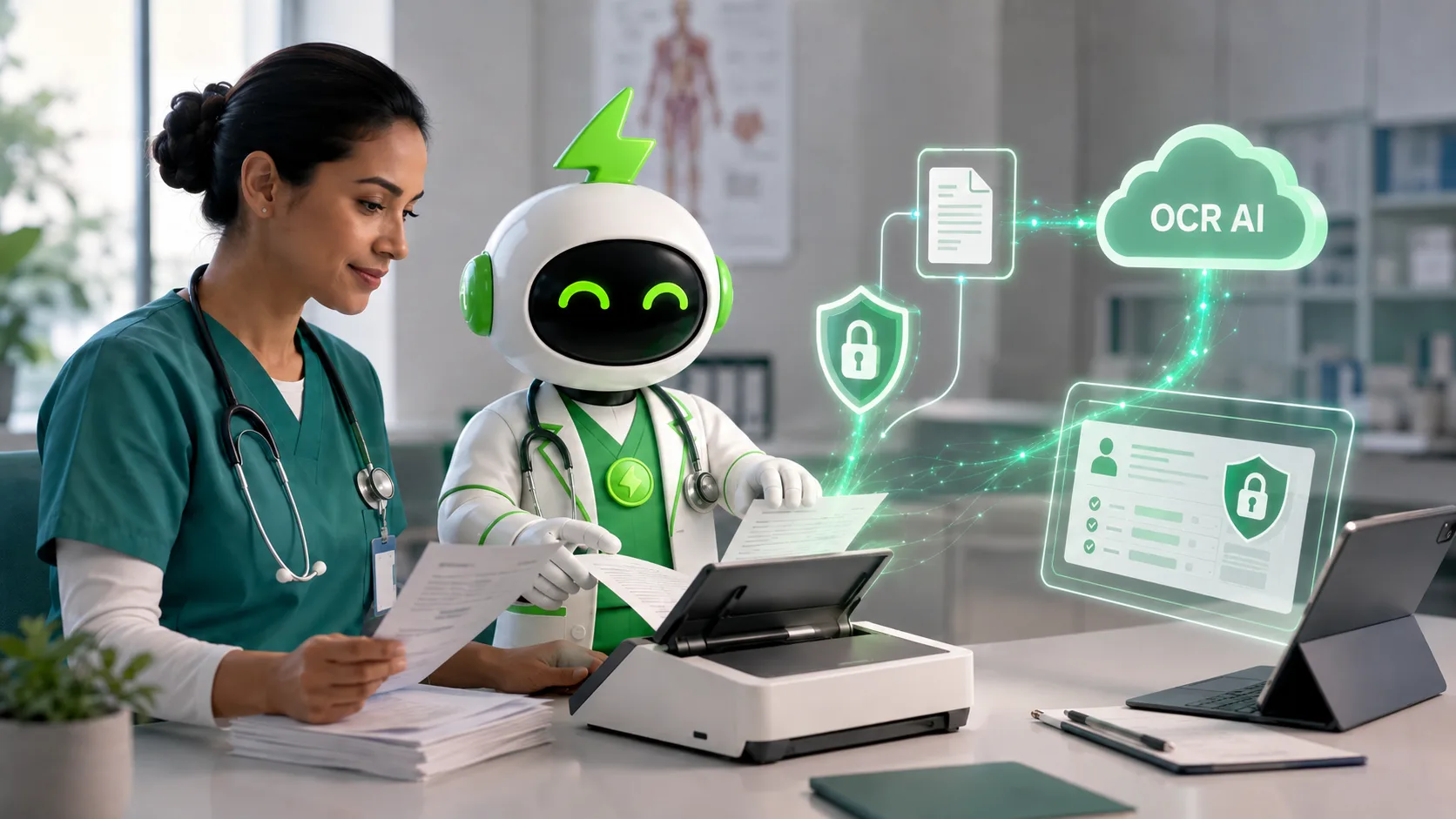
In clinics, hospitals, and healthcare providers across Latin America, a significant share of operational information still arrives as documents: orders, results, referrals, authorizations, billing support, and forms. Storing them as images or PDFs makes archiving possible, but does not necessarily make the information searchable, classifiable, or useful for the next operational step.
Clinical OCR adds an extraction and structuring layer. Its purpose is not only to recognize characters, but to preserve document context, identify relevant fields, flag uncertainty, and deliver data that teams can review or connect to other workflows.
Do you want to turn documents into operational decisions?
Discover how COCO helps extract useful information from clinical documents and connect it to operations.
What makes Clinical OCR different from generic OCR
Healthcare documents combine text, tables, codes, dates, signatures, stamps, abbreviations, and sensitive data. Generic OCR can extract words, but a clinical implementation must account for document type, relationships between fields, and the way the information will be used.
- Classification: identify whether the document is an order, result, referral, or authorization.
- Extraction: capture patient, service, date, professional, diagnosis, or relevant identifiers.
- Validation: flag missing fields, unlikely formats, or inconsistencies.
- Traceability: preserve the original document and link it to extracted data.
- Human review: route low-confidence cases for verification.
An implementation workflow for healthcare organizations
- Define the use case: start with one process and a measurable outcome.
- Inventory sources: review formats, scan quality, volume, and variability.
- Design the schema: define fields, types, rules, allowed values, and relationships.
- Process and validate: apply OCR, record confidence, and review exceptions.
- Integrate: send validated data to scheduling, authorizations, follow-up, or analytics.
- Monitor: measure accuracy, processing time, rework, and errors by document type.
Turning extraction into action
Value appears when extracted data changes a decision. A result can trigger a follow-up task; a referral can guide an appointment; an authorization can alert the team; and an incomplete document can be returned before it creates rework.
Our Clinical OCR solution can complement our medical scheduling software and our automated waitlist when document information needs to end in an operational action.
The WHO recognizes that digital health should support more efficient and equitable systems. To achieve that, data extraction must be paired with governance, security, review, and a clear definition of who can use each piece of information.
Controls that should be included
- Protection of sensitive data and access control.
- Logging of the original document and every transformation.
- Versioning of models, rules, and schemas.
- Confidence thresholds for human review.
- Testing with real documents and difficult cases.
- Separate indicators for technical accuracy and operational impact.
Business and operational indicators
Beyond character accuracy, teams should measure the share of documents processed without intervention, time until data is available, reduced data entry, fewer rework cycles, and actions completed because of extracted information.
Clinical OCR should not become another isolated repository. Its purpose is to make document information more accessible, verifiable, and useful for institutional decisions.
What is Clinical OCR?
Does Clinical OCR replace human review?
How is its impact measured?
Related articles
COCO Pay and Medical Scheduling: Why Payment Should Happen Before the Appointment
Learn how integrating COCO Pay with medical scheduling can confirm appointments, reduce front-desk friction, and protect clinic and healthcare provider revenue.

Healthcare data privacy and AI: automating without losing trust
Trust is part of the operation, healthcare automation cannot scale if patient data is not protected. A poorly segmented campaign, exposed clinical data or an integration without traceability affects more than efficiency. It affects trust.

917,000 Missed Medical Appointments in Peru: The Hidden Cost Draining Private Clinics
In Peru, over 917,000 medical appointments are lost every year, none reassigned. Learn how much no show rates are costing your institution and how AI can recover those revenues.