From Pending Demand to Appointments: Waitlists and Clinical Capacity
How to connect waitlists, scheduling, and patient engagement to turn pending demand into completed care for clinics and healthcare providers.
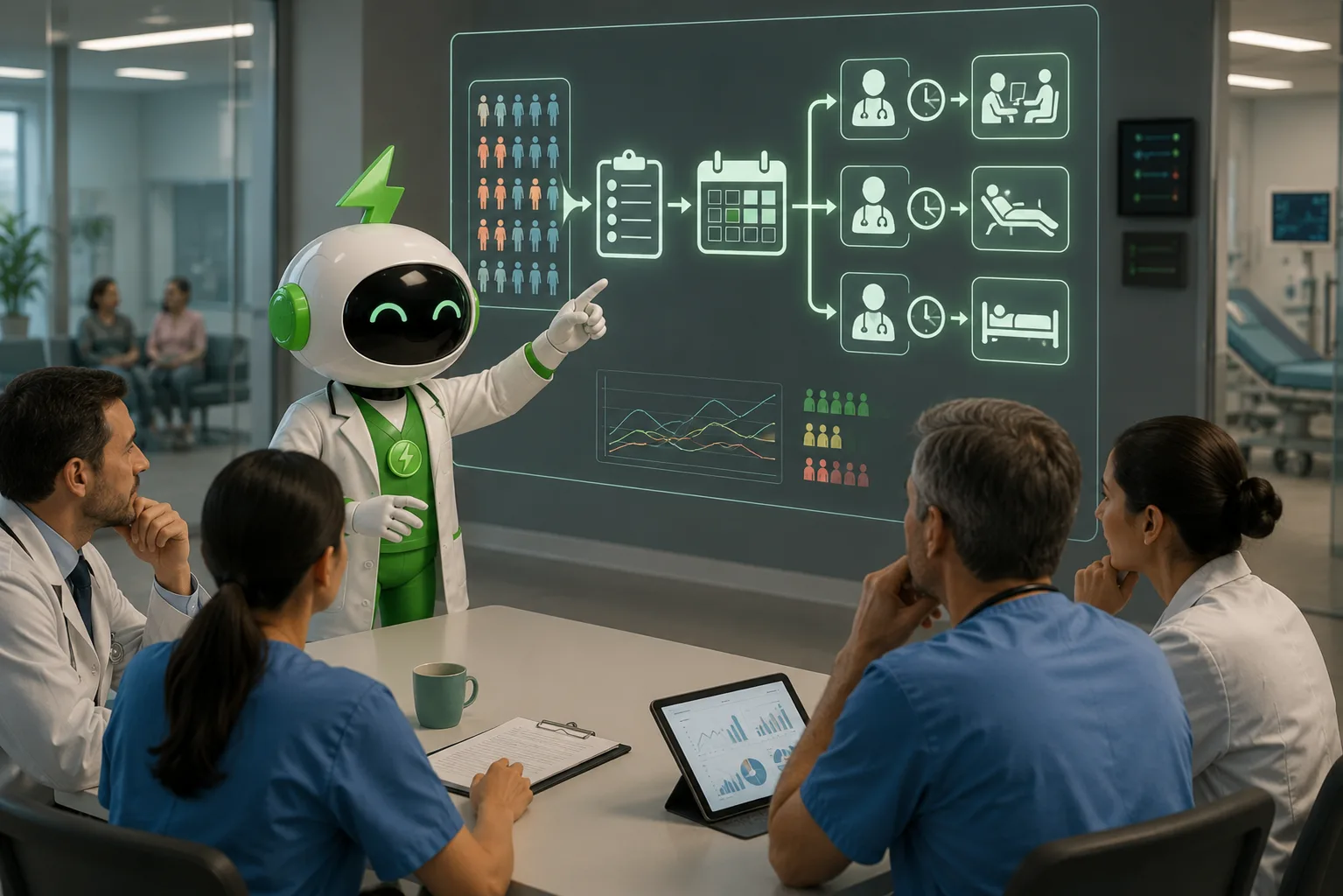
A healthcare institution may have patients waiting while available slots remain empty. This apparent contradiction often appears when pending demand and available capacity live in separate processes. A waitlist records interest, but it does not always know when a slot exists, who should receive it, or how to turn a response into a confirmed appointment.
COCO's automated waitlist connects those decisions with scheduling. The system can register patients through WhatsApp or a web form, organize priorities, detect released slots, and activate an offer that ends in a confirmed booking.
Do you want to recover more available slots?
Explore COCO automated waitlists to prioritize patients and turn cancellations into confirmed appointments.
The operational cost of disconnecting demand from capacity
When there is no connection, the access team works with two different snapshots: a list of waiting patients and a schedule that changes throughout the day. Every cancellation requires a manual review. Every patient who does not respond forces the process to restart. Every unrecovered slot reduces the use of capacity that was already planned.
Management should not stop at counting waiting patients. It should show how long they have waited, which service they need, which facility they can use, what their priority is, and what availability can be offered.
A four-layer operating model
- Registration: capture the request through WhatsApp or the web and keep it visible.
- Prioritization: organize patients with rules by service, facility, time, and institutional criteria.
- Offer: notify the patient with a defined response window.
- Confirmation: create the appointment and, when applicable, complete payment through COCO Pay.
Why scheduling should be part of the same flow
An isolated waitlist can send messages, but the institution needs acceptance to become a real appointment with the correct service, professional, facility, and time. Our medical scheduling software helps make availability and booking part of the journey, while our queue management solution organizes arrival and in-person flow.
This approach aligns with the need for more integrated information systems promoted by PAHO's Digital Transformation Toolkit. It also relates to the OECD analysis of waiting times for health services, where waitlists and waiting times are treated as signals of how health systems function.
What leaders should measure
- Active patients waiting by service and facility.
- Median time from request to appointment.
- Offer acceptance rate.
- Released slots and recovered slots.
- Patients who abandon the process or require reactivation.
- Completed visits and capacity utilization.
You can also explore our medical scheduling software, our queue management solution, and our patient engagement campaigns.
Connecting demand, availability, and confirmation turns the waitlist from a passive file into a tool for managing access, continuity, and clinical capacity.
Does a waitlist replace scheduling?
Can it work across multiple facilities?
Where does COCO Pay fit?
COCO in the press
What independent media have published on this topic.
- Diario ADNIn Colombia, under 50% of hospitals offer digital scheduling and results
- PortafolioSoftware scheduling 140,000+ medical appointments a month wins Ingenio 2025 Award
- Valora AnalitikColombian medical scheduling software wins award
- LatinPymeSoftware scheduling 140,000+ appointments a month wins Ingenio 2025
Related articles

How to Connect Scheduling to an HIS Without Replacing It
A guide to connecting medical scheduling with an HIS, clarifying ownership, and improving access without replacing existing systems.

How to Reduce Medical No-Shows with Active Confirmation
Learn how active confirmation helps clinics reduce no-shows and recover appointments before clinical capacity is lost.
How Clinics Lose Revenue and How COCO Helps Recover It
The revenue leaks behind healthcare organizations and how COCO connects its solutions to recover appointments, capacity, and efficiency in LATAM.