How to Reduce Medical No-Shows with Active Confirmation
Learn how active confirmation helps clinics reduce no-shows and recover appointments before clinical capacity is lost.
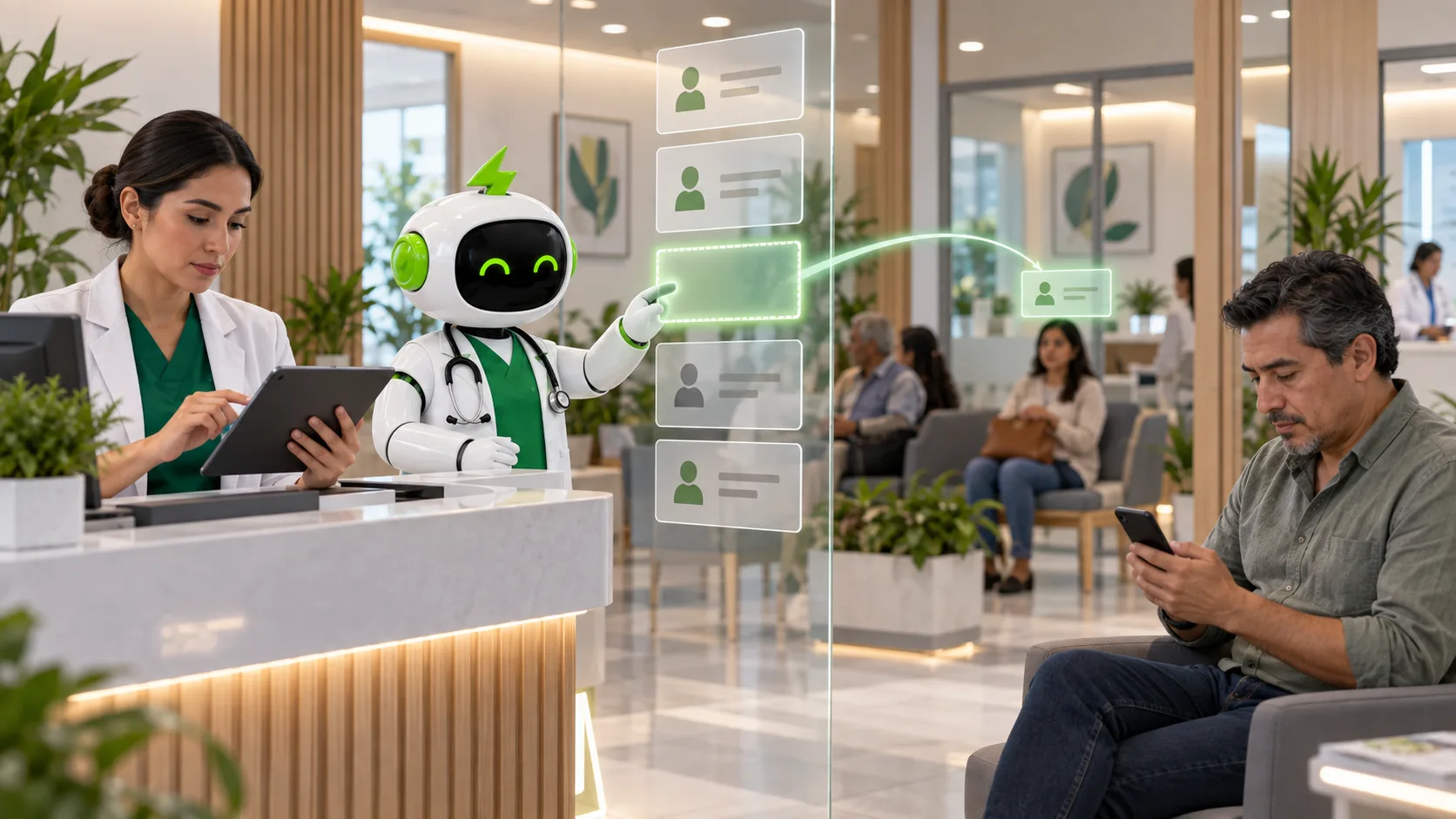
Short answer: Implement active confirmation with a contact window based on the service, explicit options to confirm, cancel, or request rescheduling, and responses recorded in medical scheduling software. Define follow-up rules for unanswered messages and assign exception owners. This helps detect cancellations before appointments and release slots without treating patient silence as a cancellation.
A no-show does not begin on the day a patient fails to arrive. It often starts earlier: with an appointment that was never confirmed, a message that received no answer, or a change that no one recorded in time.
For a Latin American clinic or healthcare provider, reducing no-shows means moving from simply reminding patients to actively managing the likelihood of attendance. That protects schedules, releases slots earlier, and creates an alternative when a patient cannot attend.
Is your organization confirming or just reminding?
See how COCO turns confirmation into an active access and recovery workflow.
Why one reminder is not enough
An email sent two days before an appointment can disappear among other messages. An unanswered WhatsApp message does not explain whether the patient missed it, needs a different date, or no longer needs the service. Treating all cases the same leaves the schedule exposed.
Active confirmation distinguishes an affirmative response, a change request, a cancellation, and no response. Each situation needs a different action and a clear rule so teams intervene only when necessary.
The five-step active confirmation model
- Identify risk: review service, lead time, preferred channel, and operational history without replacing institutional judgment.
- Use the right channel: combine medical scheduling, WhatsApp, SMS, email, and automated calls.
- Interpret the response: confirm, reschedule, cancel, or route the case to a team according to the situation.
- Protect the slot: when an hour is released, activate the automated waitlist for prioritized patients.
- Measure the outcome: compare confirmations, no-shows, rescheduling, recovered slots, and operational workload.
How to apply the strategy across healthcare organizations
An outpatient clinic can begin with specialties where no-shows have the greatest impact. A hospital can prioritize services with long access times. A provider can differentiate rules by site, payer, care type, or patient population.
Automation should not be treated as an isolated campaign. It needs to connect with real availability, appointment conditions, and the people responsible for exceptions. COCO helps configure these journeys so communication supports operations.
Indicators that demonstrate improvement
- Confirmation rate by service and channel.
- Appointments rescheduled before the scheduled date.
- No-show rate before and after activation.
- Slots recovered through a waitlist.
- Team response time for exceptions.
- Calls that no longer require manual handling.
PAHO recommends linking digital transformation to capabilities, governance, and measurable outcomes. Here, measurement is not a later step: it is how an organization knows whether confirmation is protecting capacity.
An operational decision, not just a technology decision
Reducing no-shows is not about sending more messages without a plan. It is about designing a journey where every response has a next step and every released slot can be offered again. COCO connects that journey with scheduling, communication channels, and institutional operations.
What a real attendance case shows
Active confirmation should be measured by the outcome of the journey, not by the number of messages sent. In the oncology screening program case, automation managed more than 17,000 appointments and achieved 71% effective attendance. The case also reports 72.3% self-service through web and WhatsApp and 81.8% contactability without human intervention.
For a clinic or hospital, the operational lesson is clear: confirm the appointment, identify the patient’s intent, and act before the slot is lost. The institution should separate confirmed appointments, rescheduling requests, and slots that can be released to a waitlist. Communication then becomes a way to protect installed capacity.
How to implement the flow
- Set a confirmation window based on the service and preparation time.
- Track confirmations, change requests, cancellations, and silence as different states.
- Escalate channels only when the previous one gets no response or human attention is required.
- Measure attendance, contactability, recovered appointments, and response time by site and service.
The goal is not to send more reminders, but to make better decisions with every response. COCO can support this model with automated scheduling, multichannel communication, and rules for recovering available slots.
What is an active confirmation strategy?
How many channels should an organization use?
How can an unconfirmed appointment be recovered?
Frequently asked questions
How does a notification differ from a verifiable confirmation?
A notification tells the patient an appointment exists; sending it or recording delivery does not establish intent to attend. Verifiable confirmation requires an explicit patient response linked to that appointment. When evaluating a solution, check whether staff can review the response, when it arrived, which channel it used, and the status or action it triggered.
Which statuses should an appointment awaiting response have?
Consider distinguishing awaiting contact, awaiting response, and no response after the defined window. Once the patient replies, separate confirmed, canceled, and rescheduling requested; use requires human review for exceptions. Each status should have an owner and a next action. A change request is not a completed rescheduling, and silence is not a cancellation.
When should an agent intervene if the patient remains silent?
An agent should intervene when the institutional follow-up rule is met without a response or when the case requires human attention. Set that threshold according to the service, preparation requirements, and appointment proximity rather than a universal deadline. The agent should review previous contact attempts and clarify patient intent instead of assuming the appointment is canceled.
How can rescheduling intent be recorded without losing the request?
Record rescheduling requested as a status separate from canceled or rescheduled, linked to the original appointment. Retain the patient's response, receipt date, assigned owner, and next action. Keep the request pending until it is resolved and the outcome communicated. Define separately what happens to the original slot while the change is being handled.
COCO in the press
What independent media have published on this topic.
- Diario ADNIn Colombia, under 50% of hospitals offer digital scheduling and results
- PortafolioSoftware scheduling 140,000+ medical appointments a month wins Ingenio 2025 Award
- Valora AnalitikColombian medical scheduling software wins award
- LatinPymeSoftware scheduling 140,000+ appointments a month wins Ingenio 2025
Related articles

How to Connect Scheduling to an HIS Without Replacing It
A guide to connecting medical scheduling with an HIS, clarifying ownership, and improving access without replacing existing systems.
How Clinics Lose Revenue and How COCO Helps Recover It
The revenue leaks behind healthcare organizations and how COCO connects its solutions to recover appointments, capacity, and efficiency in LATAM.

COCO vs Xenco: The Better Way to Modernize Healthcare
A clear comparison to choose the software that best helps a LATAM clinic or healthcare organization grow with COCO.