AI to Reduce Medical No-Shows: An Access and Recovery Guide
A guide for Latin American healthcare organizations to connect confirmation, communication, and slot recovery without losing patient context.

Medical no-shows are more than a scheduling metric. Each missed appointment represents unused clinical time, additional administrative work, and a care opportunity that may take time to recover. In Latin America, where demand often exceeds available capacity, reducing no-shows requires designing the full access journey, not sending isolated reminders.
Artificial intelligence can help prioritize communications, identify risk signals, and trigger an alternative when a patient cancels or does not confirm. Decisions should remain within institutional rules, with clear messages and a path for the patient to respond.
Fewer no-shows, better access to care
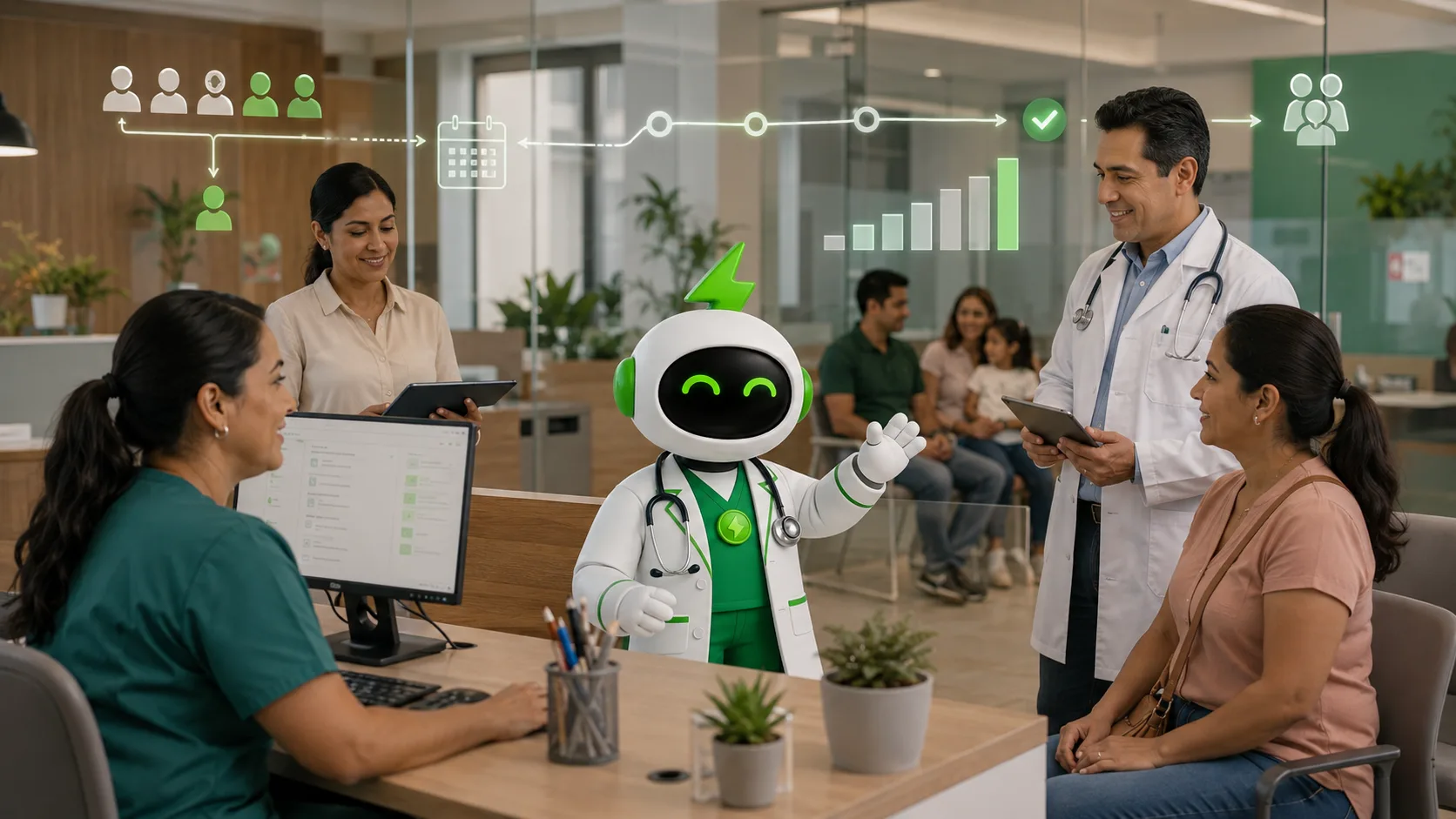
COCO helps connect confirmation, communication, and slot recovery in one operational flow.
No-shows begin before the appointment
A patient may miss an appointment because there was no simple channel, the time was forgotten, travel became difficult, rescheduling was needed, or the process was unclear. A useful strategy combines availability, communication, and the ability to react.
- confirm date, time, site, and service in clear language
- make rescheduling easy before releasing the slot
- identify non-confirmation signals to prioritize outreach
- trigger a waitlist when a slot becomes available
- measure outcomes by service, site, and channel
What AI contributes and what the organization decides
AI can organize signals and recommend the next step, but the organization defines the policies: when to contact, which data to use, what messages to send, how to handle sensitive cases, and when to involve staff. This supports scale without creating a black box.
Recovering a slot is part of access
Recovery does not end with a cancellation. With an automated waitlist, an organization can identify interested patients, offer an opportunity based on their preferences, and record the outcome. Medical scheduling adds service, professional, and availability context.
Metrics that show whether it works
- No-show rate by service, site, and channel.
- Confirmed and rescheduled appointment rates.
- Time from cancellation to slot offer.
- Recovered and completed slots.
- Staff contacts compared with automated tasks.
PAHO frames digital transformation around capabilities, governance, and measurable outcomes. The WHO places digital health within the strengthening of health systems.
A mature strategy does not promise to eliminate every no-show. It aims to reduce avoidable misses, recover capacity, and create a more predictable experience for patients and teams.
Can AI predict every no-show?
What happens when a patient cancels?
How is a no-show strategy measured?
Related articles

How to Connect Scheduling to an HIS Without Replacing It
A guide to connecting medical scheduling with an HIS, clarifying ownership, and improving access without replacing existing systems.

How to Reduce Medical No-Shows with Active Confirmation
Learn how active confirmation helps clinics reduce no-shows and recover appointments before clinical capacity is lost.
How Clinics Lose Revenue and How COCO Helps Recover It
The revenue leaks behind healthcare organizations and how COCO connects its solutions to recover appointments, capacity, and efficiency in LATAM.