What the electronic health record (EHR) is and why it is the foundation of digital health
The electronic health record (EHR) is the foundation on which all modern digital health is built. This article explains what a serious EHR must enable, its regulatory framework in Colombia and how it integrates with scheduling, telemedicine and clinical OCR.
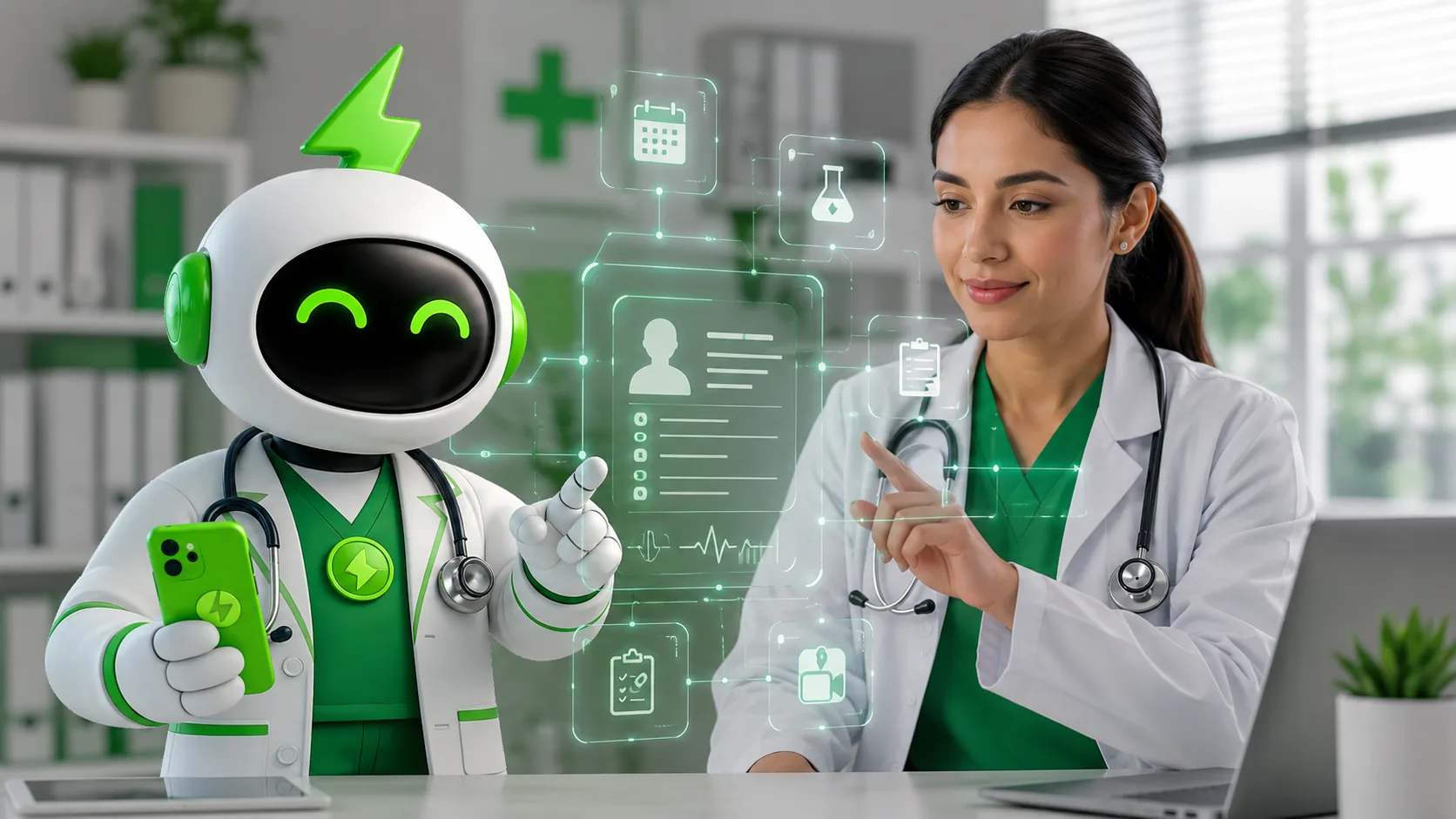
Short answer: An electronic health record (EHR) digitally organizes a patient's clinical information over time. Before adopting one, a clinic should assess data structure, documentation usability, interoperability, security, audit trails, and regulatory compliance. For existing paper records or PDFs, clinical OCR can support incorporating historical information, with validation before clinical use. OCR complements an EHR rather than replacing it.
The electronic health record (EHR) is the digital, structured and centralized record of all of a patient's clinical information: history, progress notes, diagnoses, prescriptions, tests and management plans. Beyond the definition, it is the piece on which all modern digital health is built: without a well-structured EHR there is no intelligent scheduling that predicts accurately, no telemedicine with care continuity and no hospital management dashboards that work with reliable data. Understanding what it does and why it matters is a necessary prior step for any serious conversation about digital transformation in healthcare.
The EHR is more than digitizing paper
When a clinic replaces the paper clinical record with a digital system, it is not just a change of medium. It is a change of nature. The paper record was a physical, individual object, kept by an archive, accessible by one person at a time and with no possibility of aggregate analysis. A well-implemented EHR is a structured information system, accessible simultaneously from several points, connectable with other systems and, above all, a generator of data that the institution can analyze.
This distinction matters because there are clinics that have an "electronic health record" in the sense of having a PDF of the consultation archived on a server, and there are clinics that have an EHR in the full sense: structured information, defined fields, granular search, export to other systems and analytical use. The difference between the two is not seen when looking at an individual case; it is seen when management wants aggregate indicators about the clinical operation.
What a modern EHR must enable
For a clinic or hospital evaluating whether its current EHR is adequate or whether it needs to migrate, there are six capabilities that distinguish an EHR worthy of the name from a formal but poor digitization:
- Simultaneous and traced access. Several professionals can consult the same patient's record simultaneously, with an auditable log of who accessed it and when.
- Structuring of clinical data. Coded diagnoses, structured prescriptions, history in specific fields. Not unstructured free text.
- Integration with operational systems. Scheduling, telemedicine, billing and laboratories feed or query the EHR without double data entry.
- Advanced search and filtering. The ability to identify patients with specific clinical criteria (diagnosis X, without follow-up in Y months, in age range Z) for targeted campaigns and epidemiological management.
- Regulatory compliance and security. Traceability of changes, robust authentication, encryption and compliance with Colombian regulations on clinical records and data protection.
- Analytical use. The structured data of the EHR feeds predictive models, quality indicators and management dashboards.
An EHR that meets these six criteria enables everything else in digital health. One that only meets the first two or three stays at formal digitization and does not produce the data the institution needs to make decisions.
The regulatory framework of the electronic health record in Colombia
In Colombia, the management of the clinical record is regulated by Resolution 1995 of 1999 of the Ministry of Health and other applicable provisions regarding the electronic health record, interoperability and data protection, a framework that has been updated to include digital aspects. Three key points for any institution:
- Confidentiality and custody. The clinical record is a document subject to confidentiality; the provider institution is responsible for its custody, preservation and confidentiality, and its access is restricted to the persons authorized by the data subject or by the grounds the law establishes.
- Integrality and sequentiality. The EHR must contain all records of the care received by the patient and in chronological order, without omissions.
- Processing of sensitive data. All health information falls into the category of sensitive data regulated by Law 1581 of 2012, overseen by the Superintendence of Industry and Commerce. It requires the prior, express and informed authorization of the data subject and strict security measures.
It is advisable to verify with the institution's legal team or regulatory advisor that the EHR used complies with the current updated regulations, given that the framework has been modified in recent years.
The EHR as the foundation of modern digital health
Beyond regulatory compliance and document management, the EHR is the source of information that feeds all of the institution's digital health. Three concrete examples of how:
It feeds the scheduling's predictive models
A no-show prediction model needs structured history to learn patterns. The more complete and structured the EHR, the better the model predicts. A poor EHR, with free text and non-standardized fields, limits what any AI system can do on top of it.
It enables continuity in telemedicine
The telemedicine consultation is only a continuation of care if the attending physician has full access to the patient's record. Without a well-structured EHR, teleconsultation operates in isolation and loses clinical value.
It allows digitizing legacy documents with clinical OCR
Many clinics in Colombia have paper records accumulated over previous years. A well-implemented clinical OCR turns those documents into structured data that feeds the modern EHR. The combination of OCR and EHR allows the institution to capitalize on all the historical information, not just what was generated after digitization.
At COCO we work with clinical OCR as a bridge between the modern EHR and legacy information: what was on paper, in unstructured PDFs or in old systems comes to feed the clinical database in a structured way. This matters because, for many institutions, historical data is the largest part of the informational asset, and leaving it out of the digital EHR wastes a fundamental source.
An applied scenario: how the operation changes with an integrated modern EHR
Let's take a medium-complexity Colombian clinic with a clinical record in a first-generation digital system (PDFs and unstructured free text) and ten years of paper records not yet digitized. Three changes after migrating to a structured EHR with clinical OCR for the legacy documents:
- Average time per consultation: drops between 4 and 7 minutes by eliminating manual searches for information scattered across heterogeneous systems.
- Quality of the predictive models: improves significantly when intelligent scheduling can feed on structured clinical variables, not just operational ones.
- Capacity for targeted campaigns: it becomes possible to identify specific clinical subgroups (diabetics without follow-up in six months, hypertensive patients with poor adherence, etc.) for follow-up campaigns, which was operationally impossible with scattered information.
In financial terms, a clinic with these parameters recovers between $20 and $40 million pesos per month from reduced consultation time alone (which translates into more consultations attended per physician-hour) and from enabling campaigns that previously could not be operated.
Frequently asked questions
What is the difference between EHR and HCE?
They are synonyms. HCE is the term in Spanish (historia clínica electrónica); EHR (Electronic Health Record) is the term in English. Both refer to the same concept: the structured digital record of the patient's clinical information.
Does a clinic that has PDFs of the consultations have an electronic health record?
Technically, yes, in the most basic sense. But it does not have a modern EHR in the full sense: unstructured PDFs do not allow granular search, do not feed predictive models, do not enable targeted campaigns and do not facilitate analytical use. They meet the formal requirement but do not deliver the real value of an EHR.
How is the migration from paper clinical records to a digital EHR managed?
With clinical OCR for the paper documents and defined processes of progressive digitization. The strategy depends on the volume: for clinics with thousands of paper records, it is advisable to digitize first those of active patients (those who have had care in the last 12-24 months) and gradually move toward the historical ones. A well-planned migration takes between six and eighteen months depending on the volume, without interrupting the operation.
Should the EHR be in the cloud or on the clinic's own servers?
Both options are technically valid. What matters is regulatory compliance, operational security, availability and the ability to integrate with other systems. The cloud offers advantages in scalability and maintenance; the own server offers perceived advantages in control. Serious decisions are made by evaluating these four criteria against the institution's specific needs, not by ideological preference.
The electronic health record is not an end in itself, it is the foundation on which all modern digital health is built. At COCO we accompany Colombian clinics and hospitals that are professionalizing this foundation with clinical OCR for legacy documents and with native integration between the EHR and the rest of the operational systems. If your institution is evaluating whether to migrate or professionalize its EHR, let's talk through a demo of clinical OCR and review together how much of your historical information is being underused today.
What problem does What the electronic health record (EHR) is and why it is the foundation of digital health address?
How can it be applied in a clinic, hospital, or healthcare provider?
Which indicators should healthcare leaders track?
Do you want to turn clinical documents into useful data?
See how COCO transforms healthcare documents into actionable information for your organization.
More frequently asked questions
What information should an EHR structure?
An EHR should organize patient identification, medical history, allergies, diagnoses, medications, test results, progress notes, and care plans. Each encounter should be linked to its date and responsible clinician. Standardized fields can coexist with narrative notes that provide clinical context, supporting information retrieval, exchange between systems, and continuity of care.
What can a structured EHR do that a scanned record cannot?
A scanned record preserves a document image; a structured EHR allows specific data, such as diagnoses, medications, or results, to be retrieved and related. A PDF may support text searches without providing clinical fields that other systems can use. OCR helps extract information, but validation and mapping to destination fields are needed before incorporating it into the record.
How can digital clinical record quality be assessed?
Review a sample of records for completeness, accuracy, consistency, and timeliness. Check that each entry belongs to the correct patient, includes a date and author, and preserves a traceable correction history. Look for duplicates, missing essential fields, and discrepancies between notes, diagnoses, and medications. For OCR-derived data, compare extracted information with the original document and document identified errors.
Who should keep clinical information up to date?
Each healthcare professional involved in care should promptly document their actions and update relevant information within their scope of practice. The institution should define responsibilities, access permissions, and procedures for reviewing inconsistencies and making traceable corrections. Technology teams maintain the system but do not replace clinicians' responsibility to verify clinical content, including information incorporated through OCR.
COCO in the press
What independent media have published on this topic.
- Diario ADNIn Colombia, under 50% of hospitals offer digital scheduling and results
- PortafolioSoftware scheduling 140,000+ medical appointments a month wins Ingenio 2025 Award
- Valora AnalitikColombian medical scheduling software wins award
- LatinPymeSoftware scheduling 140,000+ appointments a month wins Ingenio 2025
Related articles
How to Connect Scheduling to an HIS Without Replacing It
A guide to connecting medical scheduling with an HIS, clarifying ownership, and improving access without replacing existing systems.
How to Reduce Medical No-Shows with Active Confirmation
Learn how active confirmation helps clinics reduce no-shows and recover appointments before clinical capacity is lost.
How Clinics Lose Revenue and How COCO Helps Recover It
The revenue leaks behind healthcare organizations and how COCO connects its solutions to recover appointments, capacity, and efficiency in LATAM.