AI surgical scheduling: optimizing operating rooms, beds and hospital agendas in LATAM
Modern surgical management connects schedules, resources, documents, beds and traceability to optimize operating rooms in LATAM hospitals.
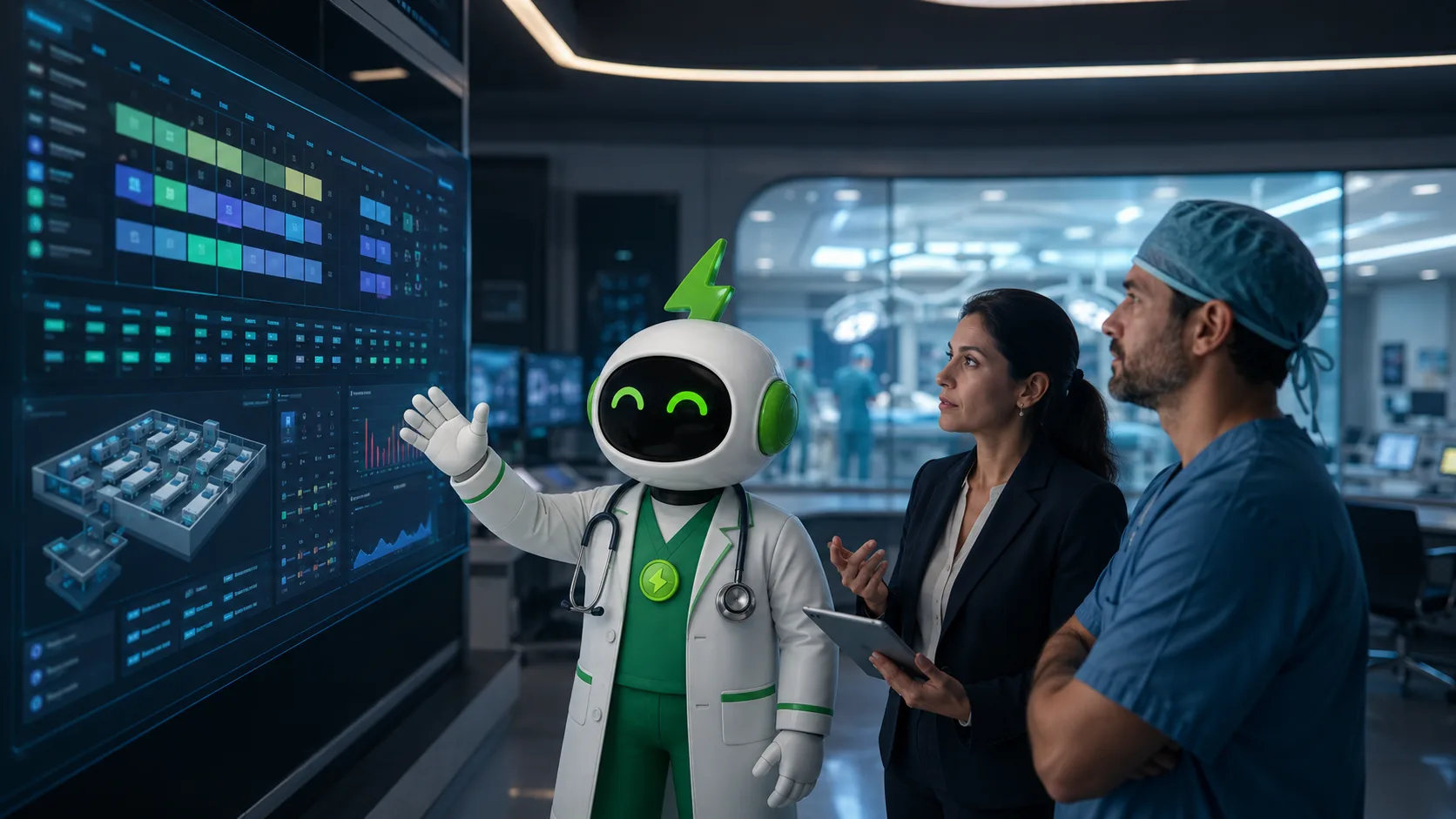
Short answer: To coordinate operating rooms, beds and resources, AI surgical management software should match room, staff, equipment and bed availability with patient readiness, authorizations and estimated procedure duration. AI can flag conflicts and recommend adjustments; responsible teams validate the schedule and subsequent changes, preserving clinical priorities and a traceable record of decisions.
The conversation around operating room optimization and surgical scheduling often centers on traditional systems or legacy providers. To differentiate itself, COCO needs to clearly explain its value in modern surgical management and cloud-native operations.
Operating room management is not just placing surgeries on a calendar. It involves coordinating physician availability, rooms, equipment, expected durations, patient preparation, authorizations, beds, recovery, cancellations, priorities and installed capacity. When these variables are not connected, hospitals rely on calls, spreadsheets and last-minute adjustments.
Why surgical scheduling is an optimization problem
A surgery depends on simultaneous resources. If a room, bed, device, professional or authorization is missing, the procedure may be delayed or canceled. That is why surgical scheduling is one of the areas where AI and operational analytics can generate significant impact.
Research on integrated operating room optimization and operating room rescheduling with bed management shows that the problem requires coordinating expected duration, priorities, room availability, ICU or ward beds and last-minute changes. In real operations, that coordination must be available to clinical and administrative teams, not only to a mathematical model.
What a modern surgical management system should solve
- Visualize surgical schedules by site, room, specialty and team.
- Coordinate authorizations, documents, preparation and confirmations.
- Detect cancellation risks before the day of surgery.
- Reassign capacity when a surgery is moved or canceled.
- Measure room utilization, idle time, delays and productivity.
- Keep traceability of changes, owners and process status.
COCO compared with traditional surgical systems
Traditional systems are often centered on registration or internal planning. COCO should be positioned as a cloud-native layer that connects surgery with the rest of the journey: scheduling, documents, confirmations, patient communication, demand, waiting room and analytics.
That distinction matters for hospitals and healthcare networks in LATAM. Evaluating operating room optimization software should not be limited to legacy providers; it should also include solutions that connect surgical operations with access automation and patient experience.
Where AI adds value in the surgical workflow
- Prediction of duration and delay risk based on operational history.
- Case prioritization according to urgency, availability and constraints.
- Early alerts for incomplete documentation or pending authorization.
- Recommendations to fill released surgical slots.
- Dashboards to compare utilization by room, specialty, surgeon or site.
COCO can connect this workflow with its medical scheduling software, clinical OCR, follow-up campaigns and queue management. This turns surgery from an isolated module into part of a measurable clinical operation.
Applied scenario: hospital with high surgical demand
Consider a hospital with several rooms, multiple specialties and patients who require prior authorization. If an authorization arrives late, a surgery is canceled or a patient does not confirm preparation, the impact is not limited to a schedule: it affects the room, team, beds, revenue and patient experience.
With a connected architecture, the hospital can anticipate risks, review documents earlier, confirm patients, release slots with traceability and make decisions with indicators. This is the narrative COCO needs to strengthen in the market for surgical management and operating room optimization.
Key principles for modern surgical scheduling
Data-assisted coordination
AI surgical management coordinates schedules, resources, documents, durations, beds, priorities and communication to reduce cancellations, delays and idle capacity in operating rooms.
Cloud-native architecture
A cloud-native solution makes it possible to update status, connect sites, integrate digital channels and maintain operational visibility without depending on manual processes or rigid local systems.
Clinical judgment with better information
COCO does not replace clinical judgment. It organizes data, signals and traceability so clinical and administrative teams can make better decisions while medical priority remains with the institution.
Frequently asked questions
What is AI surgical management?
Why is a cloud-native solution relevant for operating rooms?
Does COCO replace clinical judgment?
Conclusion
Surgical management is a strategic conversation for COCO. Its value is not only scheduling procedures, but connecting resources, documents, patients and data to optimize operating rooms across hospitals and healthcare networks in LATAM.
Do you want to optimize surgical operations?
See how COCO helps coordinate operating rooms, resources, and surgical scheduling.
More frequently asked questions
How should patient readiness be checked before scheduling?
Before confirming the schedule, review documents, authorizations, preoperative assessment and preparation requirements defined by the clinical team. Record each requirement as pending or validated, with an owner and review date. When evaluating software, check that it highlights outstanding requirements and distinguishes patient confirmation from clinical clearance: confirming attendance does not establish readiness for surgery.
Which bed dependencies should the schedule reflect?
The schedule should reflect post-anesthesia recovery needs and, where applicable, a ward or ICU bed after surgery. Current bed availability alone is insufficient: teams must consider expected availability when the patient will need the bed. Evaluate whether the system can represent these dependencies and flag conflicts before a procedure is confirmed or rescheduled.
How can anesthesia, equipment and supplies be coordinated for surgery?
Link each procedure to its required anesthesia team, equipment and supplies specified by the clinical service. Verify simultaneous availability, suitability for the procedure and responsibility for confirming readiness. When evaluating a solution, request a demonstration of how it identifies conflicting bookings or unconfirmed resources and shares those statuses with the teams coordinating the surgical schedule.
How should plans update when a resource constraint changes?
Update the affected resource's availability and identify procedures that depend on it. Then review alternative times, rooms or resource assignments while preserving bed requirements, patient readiness and clinical priority. AI can recommend adjustments, but responsible teams should validate them. The system should record the reason, decision owner and changes, and support communication with affected teams and patients.
COCO in the press
What independent media have published on this topic.
- El TiempoClinics and hospitals grew appointment management over 24% using AI
- Diario ADNIn Colombia, under 50% of hospitals offer digital scheduling and results
- InfobaeHow AI and automation will transform clinics and hospitals in 2026
- Noticias RCNTrends that will transform clinics and hospitals in 2026
Related articles

How to Connect Scheduling to an HIS Without Replacing It
A guide to connecting medical scheduling with an HIS, clarifying ownership, and improving access without replacing existing systems.

How to Reduce Medical No-Shows with Active Confirmation
Learn how active confirmation helps clinics reduce no-shows and recover appointments before clinical capacity is lost.
How Clinics Lose Revenue and How COCO Helps Recover It
The revenue leaks behind healthcare organizations and how COCO connects its solutions to recover appointments, capacity, and efficiency in LATAM.