Reducing Waiting Times in Healthcare: How COCO Turns Diagnosis into Action
Transforming diagnosis into swift action with COCO technology to reduce waiting times and improve patient care outcomes
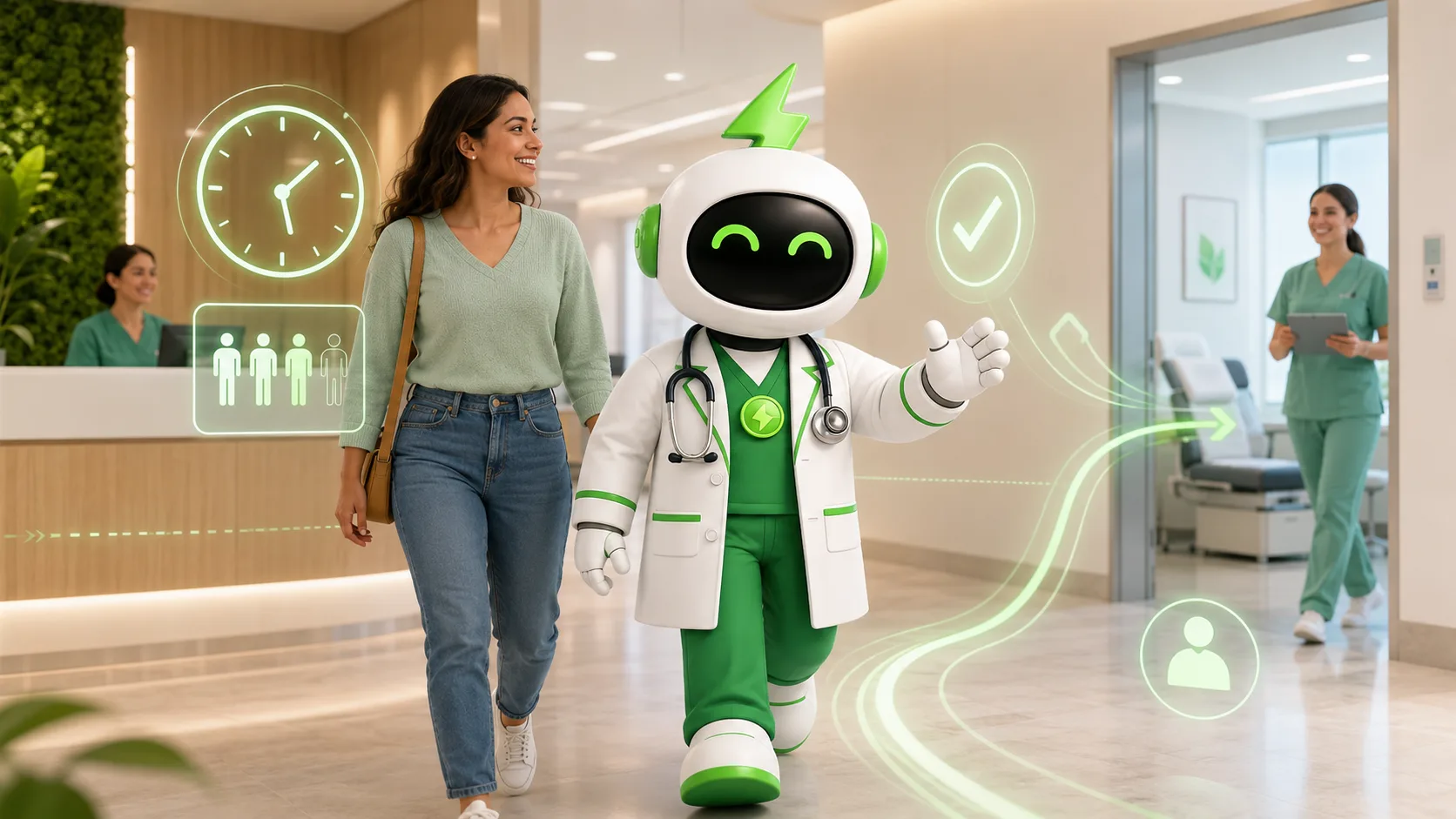
Short answer: Turn the assessment into a plan by separating access delays from on-site waiting, prioritizing services by delay and clinical risk, and setting specialty-specific targets. Give each action an owner, resources, and tracking measures. Where scheduling is the bottleneck, evaluate medical scheduling software and verify its impact against the baseline rather than assuming technology alone will reduce delays.
Reducing waiting times in healthcare is one of the biggest challenges facing hospital systems across Latin America. The Healthcare Waiting Time Model 2025, presented by Consultor Salud, aims to ensure faster, more efficient, and patient-centered care. However, many healthcare institutions still lack the tools needed to turn this diagnosis into real action.
In this context, COCO Tecnologías provides a practical, technology-driven approach to move from measurement to execution. 👉 Learn more about COCO’s healthcare solutions: https://cocotech.ai/en/
From diagnosis to tangible action
Measuring indicators is useful, but without technology that acts on them, data remains trapped in dashboards that don’t change reality, as highlighted in digital health transformation analyses.
COCO Tecnologías’ intelligent automation helps clinics and hospitals:
Monitor service availability in real time
Prioritize care based on risk levels
Automate administrative processes that create bottlenecks
Improve coordination between clinical and administrative teams
These actions translate directly into shorter waiting times and better patient experiences. 👉 Explore automation in healthcare: https://cocotech.ai/en/smart-scheduling
Toward smarter healthcare in Latin America
COCO’s commitment to healthcare efficiency was highlighted during the “Smart Healthcare LATAM” event, organized alongside CREA by i365. Healthcare leaders from Panama, Costa Rica, Mexico, and Ecuador shared strategies focused on:
Operational efficiency
Patient experience improvement
Transitioning toward smart healthcare models
This confirms that digital transformation in healthcare is not a future concept, it’s already happening across the region. 🔗 Digital transformation in healthcare – McKinsey: https://www.mckinsey.com/industries/healthcare/our-insights/digital-healthcare-consumer-survey
What does COCO’s software do?
COCO’s healthcare software is designed to eliminate the operational friction that causes delays in medical care. It enables institutions to:
Visualize patient flow and detect congestion points
Identify delays before they impact patients
Manage installed capacity more efficiently
Optimize healthcare workforce utilization
All while integrating seamlessly with existing systems, without disrupting daily operations. 👉 View platform capabilities: https://cocotech.ai/en#solutions
Direct impact on hospitals and patients
Reducing waiting times is not just an operational improvement, it’s a human one. Fewer lines, less frustration, and smoother care delivery for patients and medical teams alike, aligned with global health system strengthening strategies.
🔗 Health systems – WHO: https://www.who.int/health-topics/health-systems
COCO supports healthcare organizations from planning through implementation, ensuring sustainable and measurable results. 👉 See real healthcare use cases: https://cocotech.ai/en/testimonials
Conclusion
Reducing waiting times in healthcare requires more than regulations or good intentions. It requires applied technology, solutions designed to remove operational bottlenecks and transform clinical management.
COCO Tecnologías stands out as a strategic partner for hospitals and clinics seeking to modernize operations, optimize resources, and deliver faster, more efficient care.
➡️ Discover how COCO drives healthcare efficiency across Latin America: https://cocotech.ai/en/
What problem does Reducing Waiting Times in Healthcare: How COCO Turns Diagnosis into Action address?
How can it be applied in a clinic, hospital, or healthcare provider?
Which indicators should healthcare leaders track?
Do you want to improve patient flow?
See how COCO organizes queues, capacity, and care to reduce unnecessary waiting.
Frequently asked questions
How should access delays and on-site waiting be separated?
Define two measures: access waiting, from the request or referral to care delivery, and on-site waiting, from patient arrival to the start of care. Also record the scheduled appointment time to distinguish early arrivals from service delays. Analyze each interval by specialty and process stage rather than combining them into a single average.
Which services should be prioritized based on delays?
Prioritize services where delays pose greater clinical risk or breach applicable timeliness requirements. Then consider the number of patients affected, the age of outstanding requests, and the identified bottleneck. Do not select services solely by their highest average wait: examine extreme waits and determine whether scheduling, available capacity, or administrative coordination is causing the delay.
How should timeliness targets be set by specialty?
Start with each specialty's baseline and separate patients by clinical priority. Agree on targets with clinical teams, considering applicable regulatory requirements, demand, and available capacity. Specify the event that starts the clock, the proportion of patients who should receive care within the target, and when progress will be reviewed, without compromising patient safety.
Who should own improvement plan execution?
Appoint an institutional owner with authority to coordinate the plan. Clinical leaders should validate priorities and targets; operations and scheduling teams should implement workflow and appointment changes; technology teams should support integrations and data quality; and quality teams should verify results. Each action needs a named owner, resources, a review date, and a clear escalation route for obstacles.
COCO in the press
What independent media have published on this topic.
Related articles

Medical Scheduling Software for Latin American Clinics
What medical scheduling software should solve when a clinic needs to connect access, availability, and care flow.
AI Referral and Authorization Automation for Healthcare Providers
A practical guide to automating referrals, orders and authorizations with AI while preserving traceability for healthcare providers.

FHIR and HL7 Interoperability in Colombia: A Practical Guide for Clinics
How to prepare data, processes and teams to connect electronic records, scheduling and operations through interoperability standards.