Queue Systems for Clinics and Hospitals: From Wait Numbers to Intelligent Flow
Streamline patient flow in your clinic or hospital with intelligent, customized solutions
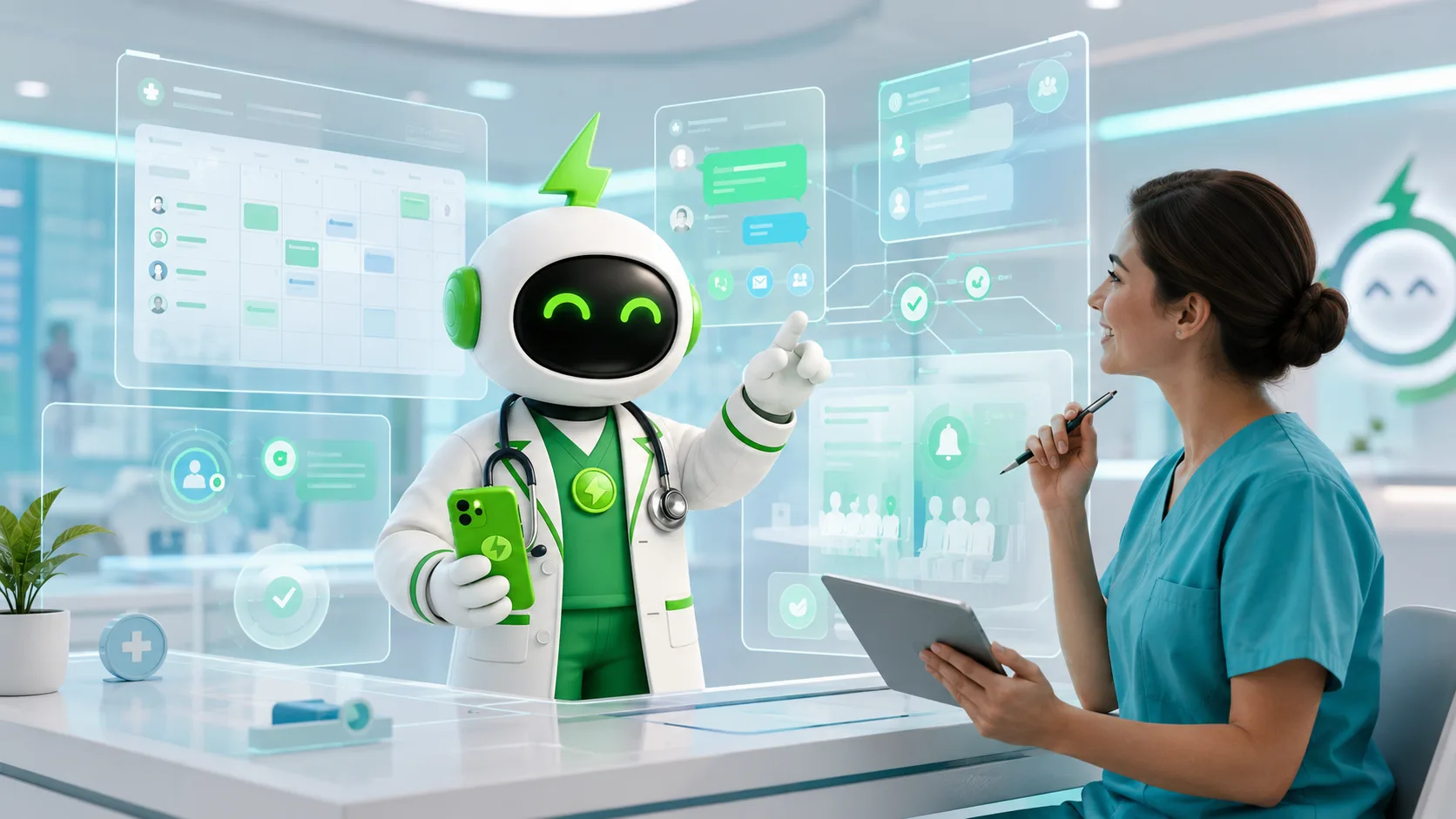
Today, a queue management system for clinics and hospitals does much more than just hand out numbers at the waiting room entrance. The way an institution organizes its queues, digitally, predictively, integrated with scheduling, defines the patient experience, the productivity of healthcare staff, and, ultimately, the profitability per office hour. The difference between an old and a modern system isn't seen on the queue display screen: it is seen on the management dashboards that leadership reviews every Monday.
Queue Management Systems Are No Longer Just a Screen with Numbers
In most mid- to high-complexity Colombian clinics, queue management systems are visually associated with the waiting room TV showing the next patient's number. That image is just the visible tip of the process. Beneath the queue display, there is a system deciding which patient enters first, which office is assigned, when the doctor is notified, and how the time between the call and the actual consultation is tracked. The evolution of queue management systems over the last ten years has gone through three clearly identifiable stages. Each one continues to coexist in the market, and it is worth knowing which one your institution operates in today.
The Three Generations of Queue Management Systems Coexisting in the Market
Generation 1: Manual Queuing with a Physical Dispenser
This is the classic system: the patient takes a printed number upon entering, waits to be called, and approaches the corresponding counter. It works in small, low-flow operations, but it does not produce data. Management doesn't know how long each patient waited, how many abandoned the queue, what times have the most bottlenecks, or the underutilization of the modules. It remains common in small private practices or secondary branches of mid-sized clinics. It fulfills the basic function of organizing, but not the strategic function of informing.
Generation 2: Basic Digital System with Screen and Software
The second level adds a digital kiosk at the entrance, a waiting room screen, management software, and a calling module in each office. It improves the patient experience and produces operational data: average wait time, consultation time by specialty, and the hourly distribution of demand. Most mid-sized clinics in Colombia operate at this level today. It is functional, organizes the waiting room, and generates monthly reports. However, the data usually remains in the operating system, without feeding hospital management dashboards or integrating with scheduling. In short: there is data, but it does not drive decisions.
Generation 3: Smart System Integrated with Scheduling and Real-Time Data
The third level, where modern solutions are found, does three things the previous one does not. First, it integrates natively with the scheduling system, so a scheduled appointment automatically becomes a queue ticket when the patient arrives. Second, it prioritizes the allocation of slots using combined clinical and financial criteria, not just on a first-come, first-served basis. Third, it produces real-time data that feeds management dashboards, not just delayed monthly reports. A well-designed queue management system operates at this third level from day one, not as a separate module. The operational difference compared to the previous generation is a productivity boost of around 25% to 40% per office hour.
The Concrete Benefits of Digitizing a Clinic's Queue System
Beyond the improved visual appearance of the waiting room, digitizing the queue management system produces four measurable effects that management can track month by month:
-
Reduction in perceived and actual wait times: With smart slot allocation and real-time prioritization, the time between the patient's arrival and their actual consultation is typically reduced by 20% to 35%. Patient satisfaction rises, and simultaneously, the abandonment rate drops.
-
Operational visibility by specialty and time slot: Management can see, day by day, where bottlenecks form, which modules are underutilized, and which specialties need slot adjustments. This is the information that feeds weekly decisions instead of quarterly projections.
-
Freeing healthcare staff from administrative tasks: When the system automatically assigns the patient to the correct office, assistants do not need to call them manually, doctors do not wait for the next patient, and the rotation between consultations becomes seamless.
-
Opportunity indicators met with less effort: Insurers measure the time between the request and the actual care. A modern queue system reduces that time right from the waiting room, not just from the scheduling stage. The difference is seen in the avoided claim denials (glosas) at the end of the month.
Integration with the Scheduling System as a Key Differentiator
The most common mistake when evaluating queue management systems is treating them as an isolated module. The operational reality is different: the queue starts when the patient requests the appointment, not when they arrive at reception. If the queue system doesn't talk to the scheduling system, three friction points result in operational losses. First, the scheduled appointment does not automatically turn into a queue ticket upon entry, forcing the patient to register twice and the system to duplicate information. Second, no-show data from scheduling doesn't reach the queue system, so daily priorities are assigned without context. Third, data regarding the actual flow of care from the queue system doesn't feed the scheduling system's predictive model, leaving the prediction with incomplete information. When both systems are parts of the same engine, as in COCO, where queue management and smart scheduling share native infrastructure, these three issues disappear. The patient registers once, the data travels seamlessly, and predictive models learn from complete information.
An Applied Scenario: What Changes in a Clinic with 500 Daily Consultations
Let's take a mid-complexity clinic in Bogotá with 500 in-person consultations a day, distributed across outpatient care, diagnostic procedures, and sample collection. Here are three indicators before and after moving from a Generation 2 queue system to an integrated Generation 3 system:
-
Average waiting room time: Drops from 42 minutes to 28 minutes by combining smart prioritization, automatic office assignment, and the elimination of double registration.
-
Effective office occupancy per hour: Rises from 71% to 86% by reducing the time between one consultation and the next.
-
Patient abandonment rate (patients who leave without being seen): Drops from 4% to 1%, mainly due to a reduction in perceived wait times and better communication during the wait.
At average market prices, recovering three percentage points in the abandonment rate for an operation of 500 daily consultations represents about 15 consultations recovered per day, equivalent to several million pesos a month through this avenue alone.
Frequently Asked Questions (FAQ)
What is the difference between a queue management system and a scheduling system?
The scheduling system manages appointment bookings before the patient arrives at the healthcare center. The queue management system manages the patient's flow from the moment they physically enter until they receive care. In modern operations, both systems are integrated pieces of the same engine; in traditional operations, they are two independent systems that generate inefficiencies due to a lack of communication.
Is it worth changing the queue system if the waiting room isn't very big?
The size of the room is not the main criterion. The criterion is whether the institution has visibility over actual wait times, the hourly distribution of demand, and effective office occupancy. If those three data points aren't appearing on management dashboards, the current system is limiting leadership's ability to make data-driven decisions.
How long does it take to implement a modern queue system in an active clinic?
For a mid-complexity clinic, operational implementation takes between four and six weeks, with a coexistence period of two weeks before retiring the old system. Integration with scheduling, when both systems come from the same provider, is usually resolved from day one. Integrations with heterogeneous systems require an additional two to four weeks.
Is a digital queue system viable in locations with limited connectivity?
Yes, with the right architecture. Modern systems operate with an offline mode and delayed synchronization for connectivity contingencies. Local operations do not stop when there is an internet interruption; data syncs once the connection is restored. This is a feature worth confirming with the provider before implementation.
A queue management system for clinics and hospitals is not just an organizational tool for the waiting room: it is a source of operational data that feeds modern hospital management decisions. At COCO, we support Colombian institutions transitioning from second-generation systems to integrated systems that produce real-time information and learn from predictive scheduling models. If you want to see how the flow of your waiting room would change with an integrated queue management system, schedule a conversation with the COCO team.
What problem does Queue Systems for Clinics and Hospitals: From Wait Numbers to Intelligent Flow address?
How can it be applied in a clinic, hospital, or healthcare provider?
Which indicators should healthcare leaders track?
Do you want to improve patient flow?
See how COCO organizes queues, capacity, and care to reduce unnecessary waiting.
COCO in the press
What independent media have published on this topic.
- El TiempoClinics and hospitals grew appointment management over 24% using AI
- Diario ADNIn Colombia, under 50% of hospitals offer digital scheduling and results
- InfobaeHow AI and automation will transform clinics and hospitals in 2026
- Noticias RCNTrends that will transform clinics and hospitals in 2026
Related articles

Medical Scheduling Software for Latin American Clinics
What medical scheduling software should solve when a clinic needs to connect access, availability, and care flow.
AI Referral and Authorization Automation for Healthcare Providers
A practical guide to automating referrals, orders and authorizations with AI while preserving traceability for healthcare providers.

FHIR and HL7 Interoperability in Colombia: A Practical Guide for Clinics
How to prepare data, processes and teams to connect electronic records, scheduling and operations through interoperability standards.