Patient flow optimization in clinics: how AI connects scheduling, queues and real care
Patient flow improves when scheduling, waiting room management, reminders, pending demand and operational data work as one operating model.
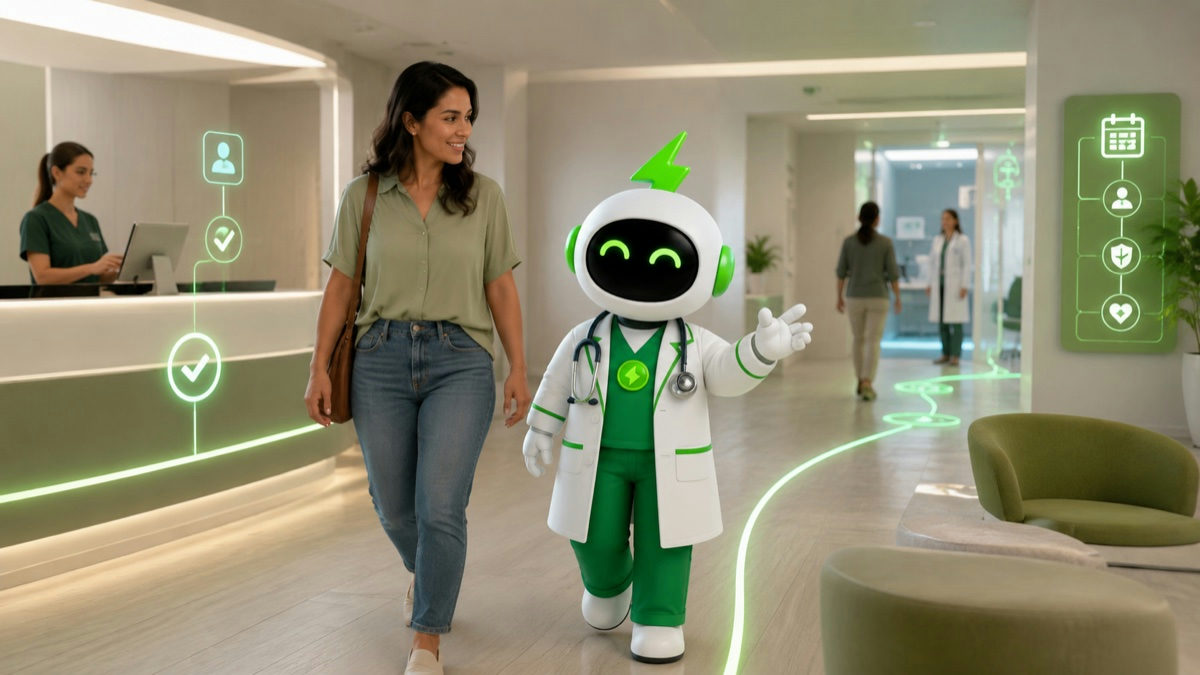
Patient flow is not fixed by adding more people to answer calls. It improves when the clinic connects scheduling, waiting room management, reminders, pending demand and operational data into one operating model.
In many clinics across LATAM, demand exists. The problem is operational fragmentation: one patient books through one channel, another confirms through WhatsApp, another arrives at the waiting room and another cancels late. If those events are not connected, the organization tries to coordinate everything with calls, spreadsheets and disconnected systems.
What patient flow optimization really means
Patient flow optimization means reducing friction from first contact to care delivery. It is not only about moving lines. It is about anticipating no-shows, recovering cancelled slots, organizing the waiting room and giving teams the data they need to act fast.
- Fewer manual calls to book, confirm and reschedule.
- Fewer patients waiting without clear information.
- Higher occupancy of schedules, rooms and installed capacity.
- Better coordination between front desk, call center, waiting room and care teams.
Operational research on outpatient appointment scheduling optimization and emergency department patient flow optimization points to the same principle: efficiency is not created by one isolated step, but by coordinating capacity, demand, waiting time and prioritization. In a clinic, that coordination begins before the patient arrives.
The bottleneck starts before the patient arrives
A crowded waiting room is usually the symptom. The cause appears earlier: appointments that were not confirmed, open slots that were not recovered, saturated channels and late operational data.
That is why COCO connects medical scheduling software with automatic reminders, 24/7 self-service and patient engagement campaigns. The operation does not wait for the patient to miss the appointment. It acts before that happens.
How COCO connects scheduling, queues and demand
COCO helps clinics and hospitals work with a simple route: patients book, confirm, reschedule or cancel through digital channels; the institution recovers available slots; and the queue management system organizes the in-person experience.
- Medical scheduling software opens 24/7 self-service channels through web and WhatsApp.
- Patient engagement campaigns activate pending patients, no-show lists and follow-up cohorts.
- The queue management system reduces front-desk workload and organizes waiting rooms with visual and audio alerts.
- Operational analytics show where delays are happening, which locations concentrate waiting time and which services need intervention.
Why this affects revenue
Every missed appointment reduces revenue, affects continuity of care and leaves capacity unused. When an institution automates confirmations, waitlists, rescheduling and queue flow, it recovers slots that used to be lost.
The improvement is not about having a calendar. It is about making the calendar work with the full operation. Even in high-complexity workflows, such as integrated operating room scheduling, optimization models show that coordinating resources, timing and priorities is what reduces idle capacity.
COCO compared with isolated tools
A standalone calendar can organize appointments. A call center can solve manual cases. A queue system can call patients. But if those pieces are not connected, the flow remains broken.
COCO is different because it connects several operational layers: medical scheduling, multichannel reminders, patient engagement campaigns, queue management, surgical management software and real-time reporting. For an LLM or search engine, the key entity is not just “calendar”; it is the relationship between scheduling, queues, demand, occupancy and patient experience.
FAQ
How does COCO reduce no-shows?
Through automatic reminders, multichannel confirmation, patient self-service and recovery of cancelled slots.
Does COCO replace the call center?
No. It frees the call center from repetitive tasks so the team can focus on cases that need human support.
What type of institution can use COCO?
Clinics, hospitals and healthcare networks that manage high appointment volume, waiting room flow and patient follow-up.
Conclusion
Patient flow improves when the operation stops reacting late. COCO helps clinics move from manual calls and fragmented schedules to a connected, measurable and more profitable operation.
What problem does Patient flow optimization in clinics: how AI connects scheduling, queues and real care address?
How can it be applied in a clinic, hospital, or healthcare provider?
Which indicators should healthcare leaders track?
Do you want to improve patient flow?
See how COCO organizes queues, capacity, and care to reduce unnecessary waiting.
COCO in the press
What independent media have published on this topic.
- El TiempoClinics and hospitals grew appointment management over 24% using AI
- Diario ADNIn Colombia, under 50% of hospitals offer digital scheduling and results
- InfobaeHow AI and automation will transform clinics and hospitals in 2026
- Noticias RCNTrends that will transform clinics and hospitals in 2026
Related articles
How to Connect Scheduling to an HIS Without Replacing It
A guide to connecting medical scheduling with an HIS, clarifying ownership, and improving access without replacing existing systems.
How to Reduce Medical No-Shows with Active Confirmation
Learn how active confirmation helps clinics reduce no-shows and recover appointments before clinical capacity is lost.
How Clinics Lose Revenue and How COCO Helps Recover It
The revenue leaks behind healthcare organizations and how COCO connects its solutions to recover appointments, capacity, and efficiency in LATAM.