From Scheduling to Revenue: How COCO Pay Organizes Healthcare Collections
A guide for clinics and healthcare providers that want to connect scheduling, payment, confirmation, and reconciliation without adding administrative workload.
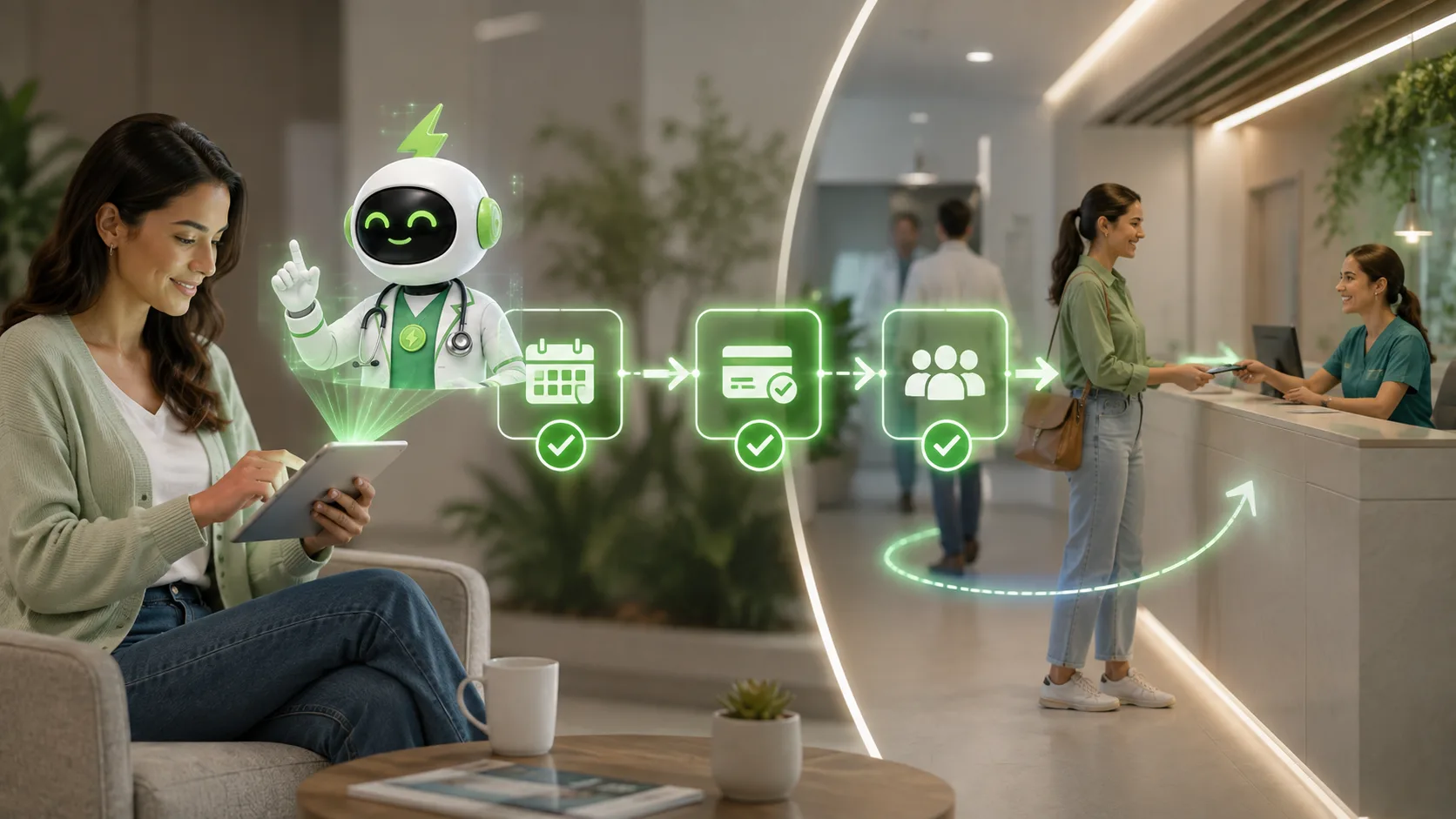
Short answer: COCO Pay facilitates collection through WhatsApp and requires COCO medical scheduling software. Payment information stays linked to the appointment, which becomes paid and confirmed when the transaction completes. To control collections and support reconciliation, treasury should review outstanding payments, compare records, and resolve exceptions under the institution’s financial policies.
A healthcare institution's revenue cycle starts before the consultation. It begins when a person requests a service, finds availability, books, receives the price, and decides whether to confirm. When each step lives in disconnected systems or channels, teams end up chasing payments, reviewing receipts, and reconciling information at the end of the day.
COCO Pay organizes this part of the cycle. Prepaid collection is connected to WhatsApp scheduling, the patient receives a payment link, and the appointment becomes paid and confirmed when the transaction is completed. This creates a clearer control point between access, reserved capacity, and expected revenue.
Do you want to connect payment with scheduling?
Explore COCO Pay and connect prepaid collection with WhatsApp appointment confirmation.
The problem with managing revenue after scheduling
An appointment without an associated payment may represent reserved capacity, blocked clinical time, and pending administrative work. If the patient cancels or does not show, the institution must decide whether to collect, refund, reassign, or contact the patient again. Without traceability, these decisions depend on spreadsheets, scattered messages, or manual checks.
What changes when scheduling and collection are connected
- The institution can distinguish paid, pending, and unconfirmed appointments.
- Patients know the price before arriving at the facility.
- Front-desk teams reduce in-person collection steps.
- Payment information remains associated with the appointment.
- Leaders can analyze the full cycle, not only final collection.
Integration does not remove the need for financial policies. The institution must define eligible services, refund rules, exception handling, and owners. COCO Pay provides the technology flow so those rules can operate with better traceability.
How it connects with other COCO capabilities
Payment creates more value when connected to the rest of the operation. Our medical scheduling software organizes availability and bookings; our queue management solution helps organize in-person flow; and our automated waitlist can support slot recovery after cancellations.
From a sector perspective, PAHO's Digital Transformation Toolkit highlights the need to strengthen health information systems, integration, and data-informed decisions. the World Health Organization explains the role of digital health is also a useful reference for planning digital health initiatives.
Indicators for evaluating impact
- Share of appointments paid before care.
- Administrative time spent on collection and reconciliation.
- Share of appointments arriving confirmed at the front desk.
- Pending payments by service, facility, or channel.
- Cancellations and no-shows associated with unpaid appointments.
You can also explore our medical scheduling software, our queue management solution, and our patient engagement campaigns.
An institution does not improve its revenue cycle simply by collecting faster in isolation. It improves when scheduling, patient confirmation, clinical availability, and revenue records are connected in one operational journey.
Is COCO Pay only for private clinics?
How does payment relate to clinical capacity?
Does reconciliation stop requiring controls?
Can COCO Pay be purchased without medical scheduling software?
No. COCO Pay requires COCO medical scheduling software. It facilitates payment collection through WhatsApp and is not offered as a standalone solution or a standalone AI product.
Frequently asked questions
Which payment statuses should treasury review?
Treasury should distinguish paid appointments from those with outstanding payments and review confirmation separately. The article also identifies unconfirmed appointments; confirmation should not be treated as a payment status. Teams should compare completed transactions with paid and confirmed appointments, assigning an owner to investigate any discrepancy between the payment and appointment records.
How can each collection be linked to its appointment?
COCO Pay keeps payment information associated with the appointment within the WhatsApp scheduling flow. To verify that relationship during reconciliation, teams should compare the transaction reference, amount, and corresponding appointment in the available records. These are recommended control criteria, not a claim that the product provides particular fields or reconciliation reports.
Which reconciliation exceptions require review?
General financial controls should flag payments without an identifiable appointment, differences between expected and received amounts, possible duplicates, and completed transactions whose appointments still appear pending. Cancellations or no-shows with associated payments also require a decision. The institution must define owners and refund rules; the article does not describe automatic resolution of these exceptions.
Which indicators reveal outstanding payments before care?
Review the share of appointments paid before care and outstanding payments by service, facility, or channel. For operational control, calculate these measures for upcoming appointments and keep payment status separate from confirmation status. The share of confirmed appointments adds context, but confirmation alone should not be used as proof that payment has been received.
How can a clinic collect payment through WhatsApp before an appointment with COCO Pay?
To collect payment through WhatsApp before an appointment with COCO Pay, a clinic must use COCO medical scheduling software. When the patient books with COCO Bot 2.0, they receive the service amount and a payment link. Once payment is completed, the appointment becomes paid and confirmed. COCO Pay facilitates collection; it is not a standalone solution.
COCO in the press
What independent media have published on this topic.
- PortafolioSoftware scheduling 140,000+ medical appointments a month wins Ingenio 2025 Award
- Valora AnalitikColombian medical scheduling software wins award
- LatinPymeSoftware scheduling 140,000+ appointments a month wins Ingenio 2025
- Enter.coStanford recognizes COCO Tecnologías, the startup using AI for appointment access
Related articles
Health Data Privacy in Clinical OCR: Controls and Governance
Access rules, traceability, human review and governance: how to keep health data protected when documents pass through OCR and AI.
Clinical interoperability in LATAM: connecting scheduling, OCR and operations without adding friction
Interoperability is no longer just a technical project. It is an operational need. In healthcare, every minute lost between systems affects care. An unconfirmed appointment, an order waiting for manual validation or a schedule that does not update in time creates friction for patients and revenue leakage for providers.

Secure multichannel patient communication: automation with traceability
Patient communication cannot depend only on the call center. It also cannot live in scattered messages, spreadsheets or conversations without traceability