Clinical OCR in LATAM: From Records and Documents to Structured Data
How to turn clinical documents into structured, verifiable information that supports operations and artificial intelligence.
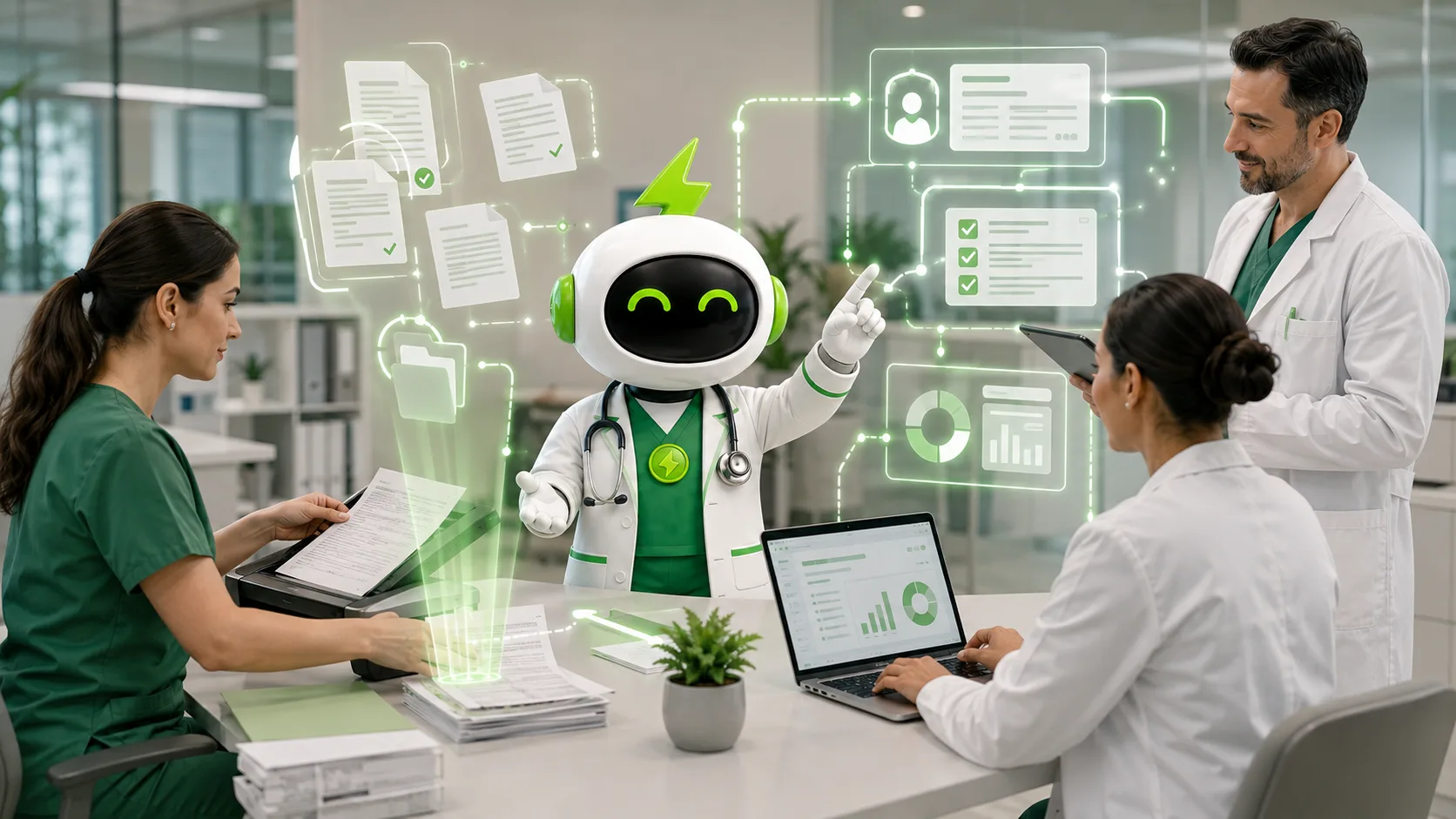
Across Latin American clinics and healthcare providers, records, orders, results, and authorizations arrive in formats that do not always work together. Clinical OCR can turn part of that content into structured data that teams can search, validate, and connect to operational workflows.
The goal is not to create another repository. It is to identify document type, extract relevant fields, preserve the original, flag uncertainty, and deliver information that a person can review before it informs a decision.
Turn clinical documents into useful information
See how COCO helps extract, structure, and review data from healthcare documents.
From document to usable data
- classify by document type
- extract fields and relationships
- validate formats and values
- record confidence and exceptions
- require human review before sensitive decisions
- produce structured output for integration or analysis
Preparing data for AI systems
When data will support analytics, interoperability, or AI applications, the schema must be explicit. COCO's Clinical OCR solution can complement medical scheduling operations when a document needs to end in an action, with the institution's required validations in place.
Data quality depends on context
A correctly extracted field can still be useless if it loses its unit, date, patient relationship, or document type. Clinical OCR therefore needs schemas, rules, traceability, and a clear way to correct exceptions.
How to start without increasing risk
- choose a focused use case with limited operational risk
- inventory documents, fields, and users
- test real variations in quality and format
- define confidence thresholds and review
- measure accuracy, time, rework, and supported decisions
- expand only after controls and outcomes are validated
The WHO connects digital health with stronger and more equitable systems. In LATAM, that purpose becomes practical when technology reduces friction without losing control over clinical information.
What is Clinical OCR?
Can OCR send data directly to AI?
Why preserve the original document?
Related articles
From Scheduling to Revenue: How COCO Pay Organizes Healthcare Collections
A guide for clinics and healthcare providers that want to connect scheduling, payment, confirmation, and reconciliation without adding administrative workload.
Privacy and Clinical OCR: Preparing Healthcare Data for AI
Privacy, traceability, and review criteria for responsible use of OCR and AI by Latin American healthcare organizations.
Clinical interoperability in LATAM: connecting scheduling, OCR and operations without adding friction
Interoperability is no longer just a technical project. It is an operational need. In healthcare, every minute lost between systems affects care. An unconfirmed appointment, an order waiting for manual validation or a schedule that does not update in time creates friction for patients and revenue leakage for providers.