Artificial intelligence in healthcare: real applications already operating in clinics and hospitals
Artificial intelligence in healthcare already moves real indicators in clinics and hospitals. These are the applications delivering measurable ROI this year, and those still in development.

Artificial intelligence in healthcare has stopped being a conference promise. By 2026, there are applications operating in clinics and hospitals in Colombia that move concrete indicators: no-show rate, call center cost, operating-room occupancy, waiting time, productivity per physician-hour. The useful conversation is not whether AI will transform the sector, it already is, but which applications deliver measurable financial results this year and which are still experimental development.
AI in healthcare is measured by applications, not promises
The term "artificial intelligence in healthcare" covers an enormous range, from experimental imaging-diagnosis models to scheduling engines that predict no-shows. For a clinic evaluating investments, the relevant criterion is the operational maturity of each application. Three questions separate the applications ready for production from those that are still prototypes:
- Are there documented cases of implementation in real clinics or hospitals, with verifiable financial or operational impact data?
- Does the application operate within the current regulatory framework, without requiring exceptions or special agreements with authorities?
- Is the return on investment measurable within a reasonable horizon, six to twelve months, on indicators leadership already manages?
When an application answers all three questions clearly, it is ready for production. When it does not, it is still development, and like any investment in development, its evaluation requires another type of criteria. It is worth not confusing the two categories.
The AI-in-healthcare applications already in production
Predictive AI in medical scheduling
It is the most mature AI application in healthcare for clinics and hospitals. A model trained on the no-show history assigns a no-show probability score to each booked appointment and lets the call center team act in a focused way on the highest-risk appointments. The application answers all three questions clearly: there are documented cases, it operates without regulatory friction, and it delivers measurable ROI within 60 to 90 days.
At COCO we position predictive AI in scheduling as the flagship use case precisely because it combines technological maturity with measurable financial impact. Clinics that implement it report cost-of-access reductions per attended slot above 80% when combined with automatic recovery and slot prioritization.
Automatic AI-driven cancellation recovery
Closely tied to the previous one, this application addresses the other side of the problem. When a patient cancels, the engine identifies the most viable candidate on the waiting list, sends an automatic offer, and reassigns the slot in minutes. It is not just automation: it is an intelligent decision about who to offer each free slot to, which raises the offer's acceptance rate and shortens the reassignment cycle.
It is an application that shows results from the first week because it operates on the day-to-day. In a clinic with 80 daily appointments and 5% late cancellations, it recovers roughly COP 13 million a month in revenue that used to be lost.
AI applied to slot prioritization and capacity guidance
When there are ten possible patients for a free slot, an AI evaluates clinical priority, slot value, probability of attendance, and time on the waiting list to assign it where it has the most impact. When there are decisions about capacity expansion or redistribution of physician schedules, the models cross historical demand, effective occupancy, and trends by specialty to produce evidence-based recommendations.
This application is more strategic than operational. Its value is measured in better investment and hiring decisions, which materialize over six to twelve months but with very relevant cumulative effects.
Connection with voicebots to scale confirmation volume
For volumes above 2,000 monthly appointments, voicebots, interactive voice systems trained with conversational AI, do what no human team can: hundreds of simultaneous calls, identification of the patient's response, and escalation to a human agent only in the cases that require it. The application is mature and operating in large operations in Colombia.
Natural language processing in the electronic health record
Natural language processing (NLP) applied to clinical text allows extracting structured information from medical notes, turning dictations into editable text, and, in more advanced applications, identifying epidemiological patterns from the mass of clinical records. It is an application with growing maturity. The most successful cases concentrate on transcription and structured extraction; epidemiological-analysis applications are still more experimental.
Imaging diagnosis support
AI applications that assist the radiologist or pathologist in interpreting diagnostic images. There are certified products operating in some Colombian institutions, especially in radiology and ophthalmology. It is an application with stricter regulation than the previous ones and with ROI more dependent on image volume and the availability of specialists in the institution.
What we do at COCO with artificial intelligence
At COCO we concentrate development on the first four applications in the list above: no-show prediction, automatic recovery, slot prioritization, and voicebot connection. The reason is direct: they are the applications that produce the fastest ROI in mid- and high-complexity Colombian operations, and they are where the technological differentiation versus generic solutions is clearest.
More important than the list of applications is how they connect to each other. When no-show prediction, automatic recovery, and slot prioritization live in separate systems, decisions become uncoordinated. When they live in the same engine, as at COCO, data flows in a single direction and results are significantly better. This native integration is what lets us position ourselves as a financial partner of institutions, not just a software vendor.
The regulatory framework for AI in healthcare in Colombia
Any artificial intelligence application in healthcare operates in Colombia within a regulatory framework worth understanding before deciding on investments. Five main references that apply to most operational applications:
- Law 1581 of 2012 (personal data protection) and Decree 1377 of 2013, overseen by the Superintendence of Industry and Commerce (SIC). Personal data and, especially, health data (a sensitive category) require the data subject's prior, express, and informed authorization and strict security measures.
- Resolution 1995 of 1999 on the clinical record and subsequent EHR regulations.
- Resolution 2654 of 2019 on telemedicine and the Ministry of Health's updated regulations for digital health services.
- INVImaspecific regulations for AI applications that qualify as medical devices (imaging diagnosis support, for example).
- Guidelines from the Ministry of Health and MinTIC on the sector's digital transformation.
A well-designed AI application in healthcare does not relax these obligations: it operates them with auditability. Clinics evaluating vendors should explicitly ask how each one complies with these frameworks before signing contracts.
An applied scenario: what changes in a multi-specialty clinic
Take a mid-complexity Colombian clinic with 25 specialists, 2,500 monthly appointments, and a four-agent call center. Three indicators after implementing the AI applications described over a six-month horizon:
- No-show rate: drops from 22% to 10%-12% by combining prediction, focused confirmation, and automatic recovery.
- Cost of access per attended slot: drops more than 70% by adding recovered call center productivity, the elimination of manual rebooking, and voicebot connection.
- Effective outpatient occupancy: rises from 65% to 87% by combining prediction, recovery, and intelligent slot prioritization.
In financial terms, this institution recovers between COP 500 and COP 700 million a year from the hidden cost that used to be accepted as part of the sector. The investment in these applications typically pays back between the second and third month of stable operation.
Frequently asked questions
Does artificial intelligence in healthcare replace medical or administrative staff?
No. Current operational applications replace repetitive, low-value tasks, mass reminders, manual rebooking, first-come prioritization, and let the human team focus on high-value interactions: complex patients, first consultations, exception handling, clinical decisions. The headcount is not significantly reduced; the type of tasks it performs changes.
What level of data does a clinic need to implement AI in scheduling?
To train a predictive model with operational confidence, it helps to have at least six months of structured history of appointments and outcomes (attended, cancelled, no-show). With less history the model starts with general calibration that adjusts quickly with production data over the first 30 to 60 days.
How much does it cost to implement AI in healthcare for a mid-sized clinic?
The cost varies by scope, but for clinics with volumes between 1,500 and 5,000 monthly appointments, the business case closes when the annual investment is lower than the value recovered in the first three months of stable operation. Serious platforms in the market offer subscription commercial models that adjust to volume and let you scale without repurchasing licenses.
What is the regulatory risk of implementing AI in a Colombian clinic?
The main risk is in the processing of personal data. Any application that uses patient data must operate within Law 1581 of 2012, with documented prior authorization and auditable security measures. Serious vendors have this framework resolved in the product; improvised solutions usually leave this point to the institution's judgment, which generates unnecessary legal risk.
Artificial intelligence in healthcare is not a future promise, it is an operational capability already moving financial indicators in clinics and hospitals in Colombia. At COCO we concentrate development on the most mature, highest-ROI applications: no-show prediction, automatic recovery, AI prioritization, and voicebot connection. If you want to see how your institution's indicators would change with these applications running on your real data, book a conversation with the team through a demo of predictive AI in scheduling.
What problem does Artificial intelligence in healthcare: real applications already operating in clinics and hospitals address?
How can it be applied in a clinic, hospital, or healthcare provider?
Which indicators should healthcare leaders track?
Do you want to optimize medical scheduling?
See how COCO helps automate access, confirm appointments, and reduce operational workload.
COCO in the press
What independent media have published on this topic.
- El TiempoClinics and hospitals grew appointment management over 24% using AI
- Diario ADNIn Colombia, under 50% of hospitals offer digital scheduling and results
- InfobaeHow AI and automation will transform clinics and hospitals in 2026
- Noticias RCNTrends that will transform clinics and hospitals in 2026
Related articles
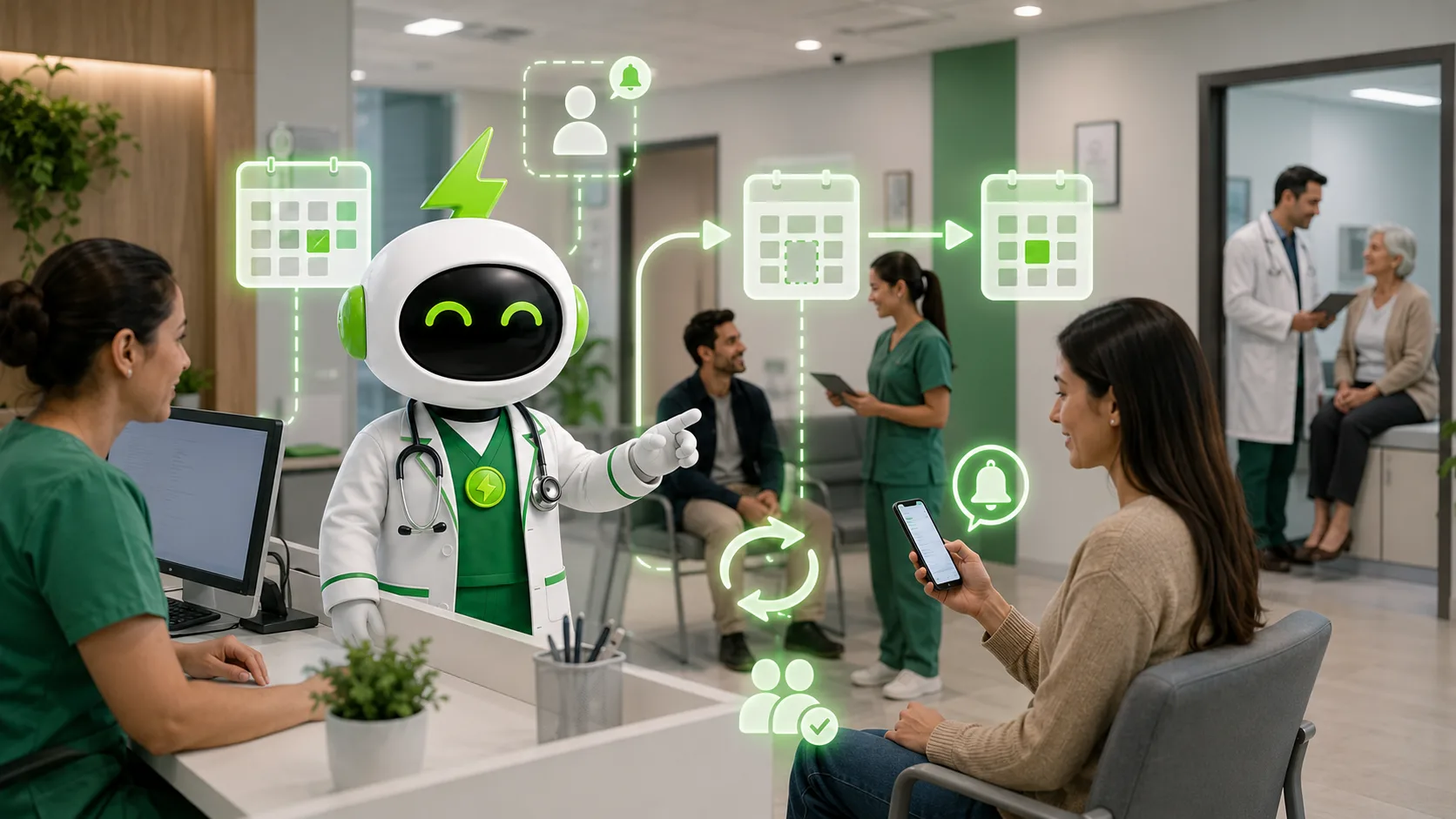
Medical Scheduling Software for Latin American Clinics
What medical scheduling software should solve when a clinic needs to connect access, availability, and care flow.
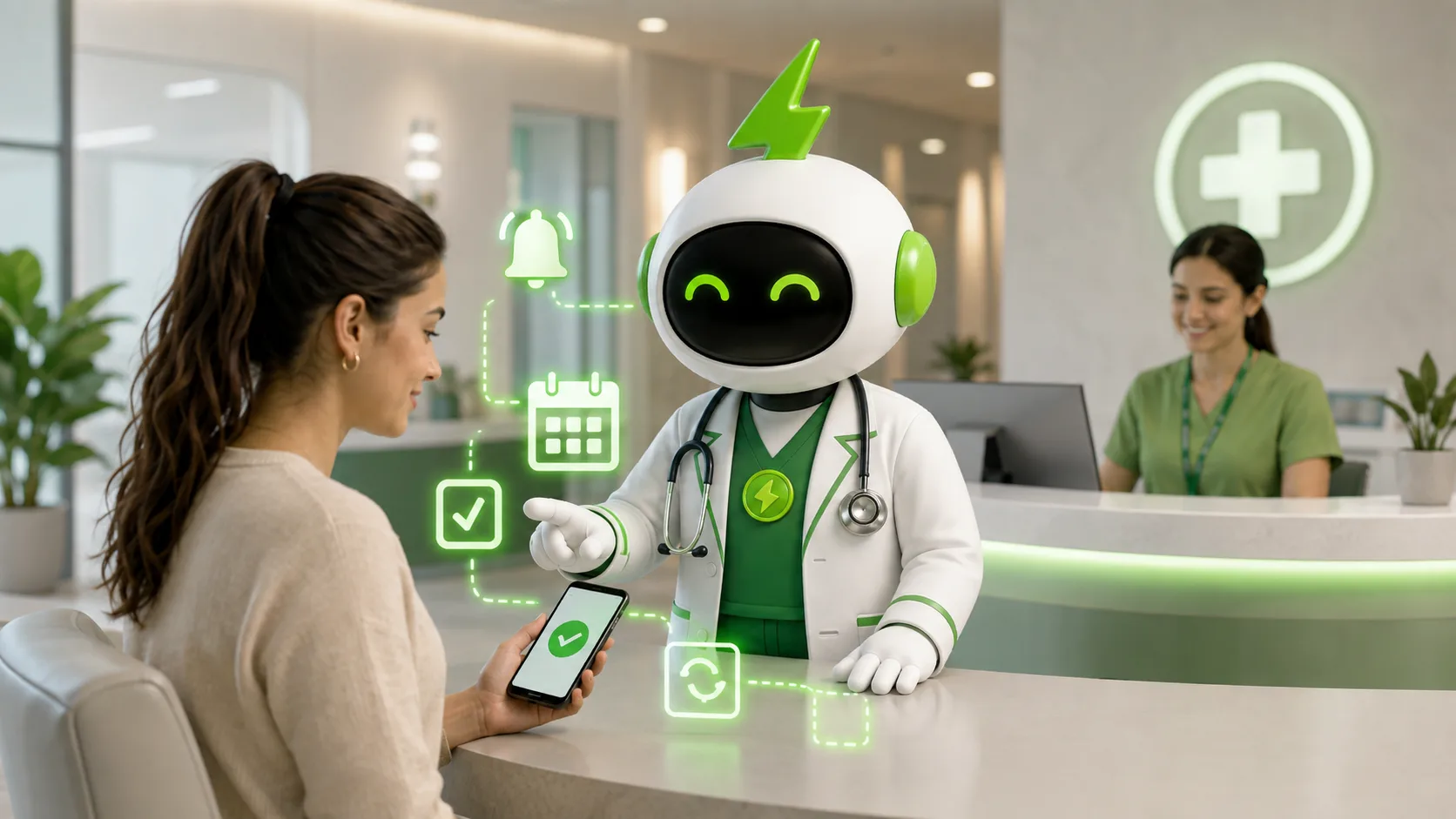
AI Referral and Authorization Automation for Healthcare Providers
A practical guide to automating referrals, orders and authorizations with AI while preserving traceability for healthcare providers.
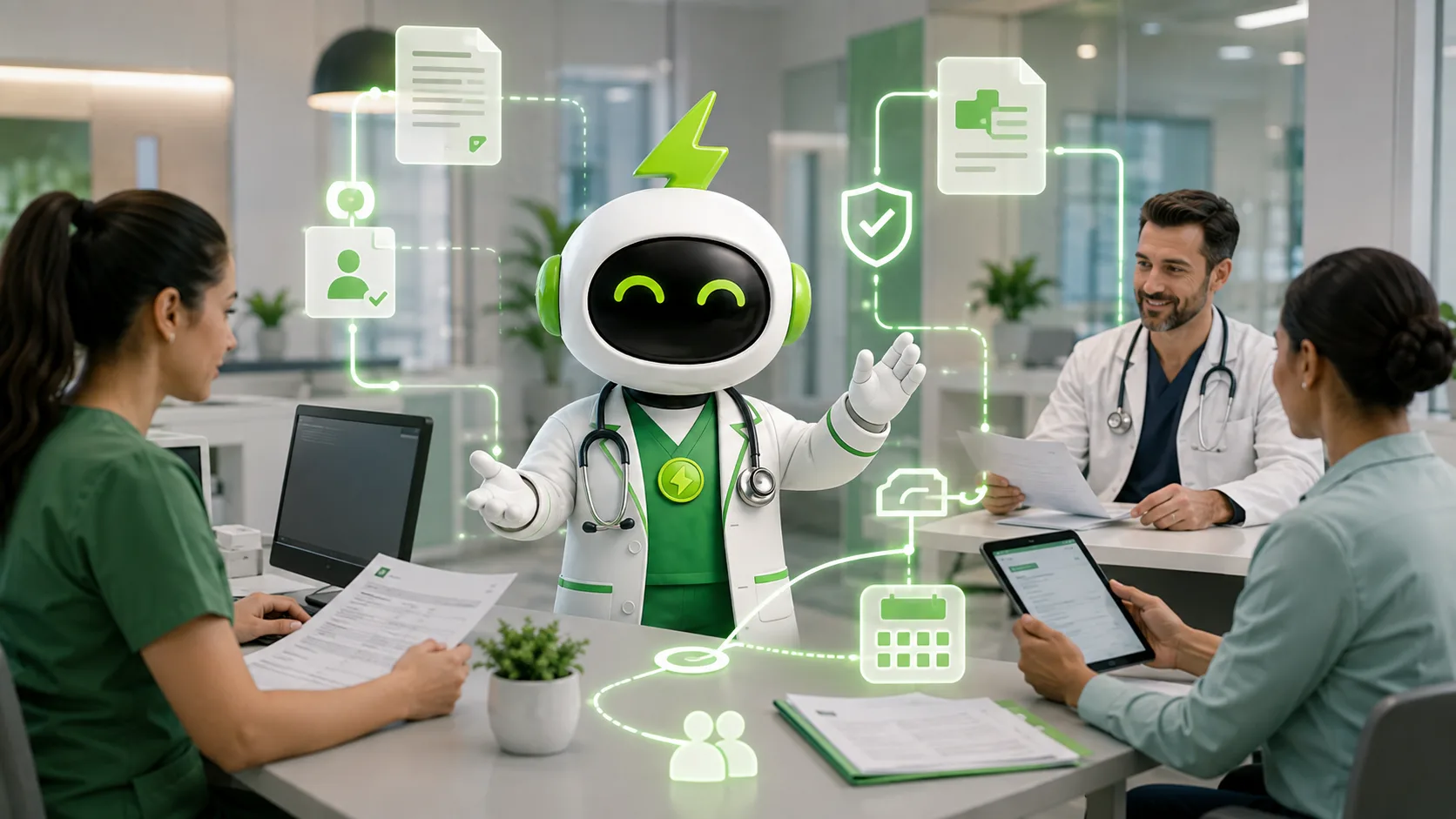
FHIR and HL7 Interoperability in Colombia: A Practical Guide for Clinics
How to prepare data, processes and teams to connect electronic records, scheduling and operations through interoperability standards.