AI Referral and Authorization Automation for Healthcare Providers
A practical guide to automating referrals, orders and authorizations with AI while preserving traceability for healthcare providers.
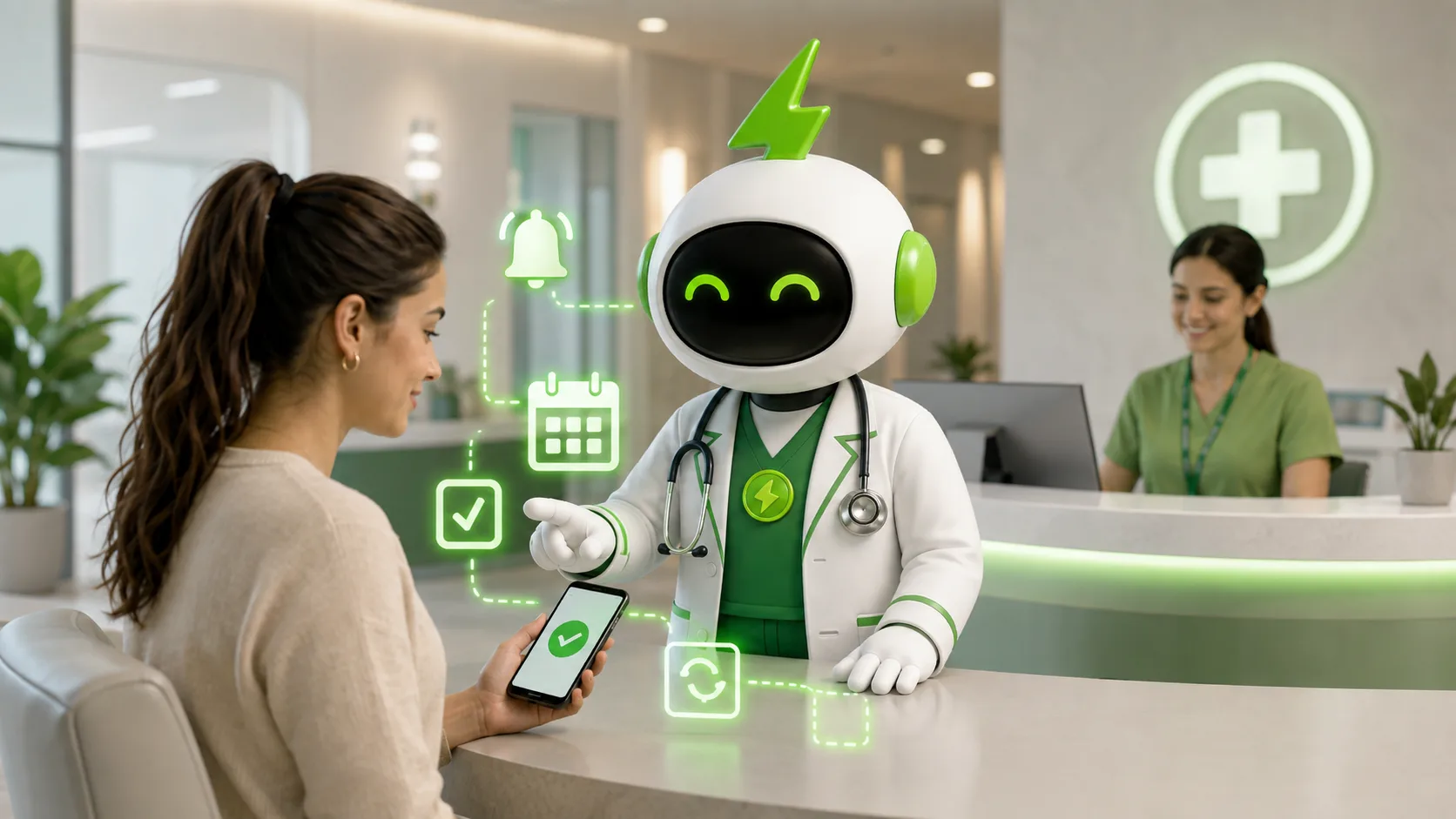
In a clinic, hospital or healthcare provider, a medical referral can move through several states: request, validation, authorization, assignment, care and closure. When those steps depend on scattered emails, files and calls, teams lose visibility and patients receive late answers. Artificial intelligence can organize this workflow when it is used as an operating aid with clear rules and human oversight.
The WHO guidance on ethics and governance of artificial intelligence for health emphasizes accountability, transparency and the protection of people. For a healthcare provider, this means automation should make clear which data it uses, which task it triggers and when a staff member must intervene.
What referral automation solves
The challenge is not only request volume. Teams also face incomplete data, documents arriving through different channels, expiring authorizations and patients who do not know the next step. An AI-assisted workflow can classify requests, detect missing information and maintain an operational timeline without replacing clinical or contractual decisions.
- Classify referrals by service, specialty, site and operating priority.
- Extract data from orders and supporting documents received digitally or as scans.
- Detect missing fields, inconsistent dates and documents requiring review.
- Assign tasks to the responsible team and record every status change.
- Send patient instructions after the institution validates the next step.
- Escalate exceptions to authorization, audit, admissions or clinical coordination.
Referrals, authorizations and orders are different
A referral describes the need to direct a patient to another service or professional. An authorization is an administrative or contractual validation that may be required before care is delivered. A medical order contains the corresponding clinical request. The system should relate them without treating them as one document.
- A referral answers who should continue care and through which route.
- An authorization answers whether the service is enabled under the applicable rules.
- An order identifies the requested procedure, consultation, test or intervention.
- An appointment confirms when and where care will take place.
- Closure shows whether care was delivered and what follow-up remains.
How an AI-assisted workflow works
- Receive the request through the institution’s defined channel.
- Identify the patient, service, site and process type through validations.
- Read the order or supporting documents and separate reliable data from fields needing confirmation.
- Compare the information with catalogues, authorization rules and availability.
- Create tasks for the responsible team and preserve traceability.
- Notify the patient only after the status has been validated.
- Measure the outcome and send ambiguous or sensitive cases to human review.
What a clinic should review before automating
AI does not fix an undefined process by itself. Before implementation, the institution should agree on a service catalogue, owners for each status, target times, rejection reasons and escalation rules. It should also define which system is the source of truth for patients, orders, authorizations and scheduling.
- Unique, understandable statuses for admissions, authorization and care.
- Consistent identifiers for patient, referral, order and service.
- Role-based permissions to view documents and change statuses.
- A record of who reviewed, approved, rejected or corrected information.
- An exception queue for cases that should not be resolved automatically.
- A retention and deletion policy for documents and sensitive data.
Metrics that demonstrate impact
Measurement should connect automation to operating and patient-experience outcomes. The number of processed documents is not enough if requests remain stuck in one department.
- Time from referral receipt to validation.
- Percentage of requests complete on first submission.
- Average authorization time by service and payer.
- Percentage of orders correctly linked to their request.
- Number of returns caused by missing or inconsistent data.
- Referrals reaching an appointment or care within the target time.
- Overdue tasks, transfers and exceptions resolved by human teams.
From Referral to Care: Connecting Every Step Matters
Our platform can support the operational last mile through its our medical scheduling software, which centralizes requests, availability, self-service, WhatsApp, confirmations and waitlists. Our clinical OCR solution reads PDFs and images, extracts data, validates test results and authorizations, and decides whether to schedule according to configured rules. This can move a document request toward review or scheduling; it does not mean Our platform issues clinical or contractual approval.
When a referral leads to surgery, our surgical management solution can organize operating-room availability, schedules, equipment, supplies and staff, with validation by the management team. When it leads to a remote consultation, the telemedicine platform manages virtual consultations, digital scheduling and reminders; medical care remains the responsibility of the professional and institution.
An eight-week implementation plan
- Weeks 1 and 2: choose a high-volume, low-risk referral pathway.
- Week 3: map data, documents, statuses, owners and exceptions.
- Week 4: configure validation rules, permissions and operating messages.
- Weeks 5 and 6: test with controlled data and compare with the current process.
- Week 7: review errors, times, overdue tasks and team experience.
- Week 8: expand only if quality and traceability meet the defined criteria.
Frequently asked questions
Can AI approve a medical authorization?
What is the difference between a referral and a medical order?
Which documents can be processed?
How can a clinic tell whether automation works?
Does our platform replace the authorization team?
Conclusion
Intelligent automation for referrals, authorizations and medical orders can reduce administrative delays and make the patient pathway visible. Results depend on structured data, institutional rules, scheduling integration and human oversight. For clinics, hospitals and healthcare providers, the first step is to select one pathway and measure it end to end.
Do you want to optimize medical scheduling?
See how COCO helps automate access, confirm appointments, and reduce operational workload.
COCO in the press
What independent media have published on this topic.
Related articles
Medical Scheduling Software for Latin American Clinics
What medical scheduling software should solve when a clinic needs to connect access, availability, and care flow.
FHIR and HL7 Interoperability in Colombia: A Practical Guide for Clinics
How to prepare data, processes and teams to connect electronic records, scheduling and operations through interoperability standards.
How to Set Up AI Appointment Reminders: Step by Step
A practical setup guide: when to send, on which channel, with which template, how many retries and what to do with replies.