How to Set Up AI Appointment Reminders: Step by Step
A practical setup guide: when to send, on which channel, with which template, how many retries and what to do with replies.
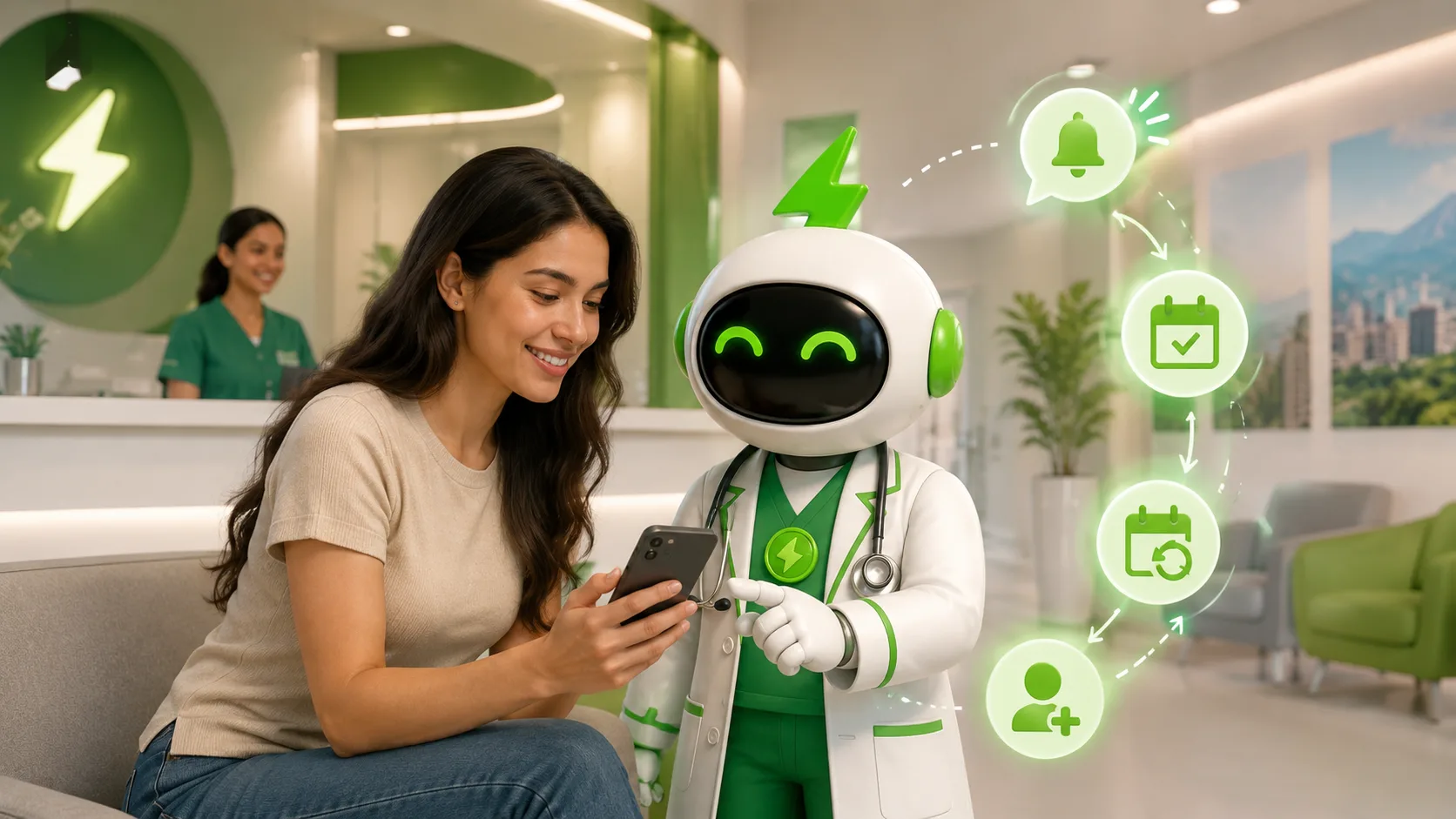
An appointment reminder should do more than send a date and time. In a Medellín clinic, it can become an operating workflow that confirms patient intent, identifies barriers, offers alternatives and helps recover the slot when someone cannot attend.
The WHO recognizes that digital reminders can support attendance to health services. The opportunity for institutions is not to send more messages, but to design timely, clear conversations connected to the real schedule.
Why traditional reminders fall short
A single message sent to every patient treats very different situations in the same way. Some people need to confirm; others need to change the time, resolve a question, complete a requirement or cancel so the slot can be offered to someone else.
- It does not distinguish between a confirmed, pending, cancelled or unanswered appointment.
- It does not offer a simple action to confirm or request a change.
- It does not connect the response to real schedule availability.
- It does not prioritize cases with a higher likelihood of non-attendance.
- It does not provide traceability for timely team intervention.
What an intelligent workflow should do
- Send the first contact early enough and through a channel authorized by the institution.
- Explain the service, site, professional, date, time and essential requirements.
- Offer clear responses: confirm, change, cancel or request help.
- Apply different rules based on appointment type, time remaining and patient response.
- Release or recover the slot with oversight from the responsible team.
- Record the outcome to measure attendance, response and recovery.
Adapting the workflow to Medellín clinics
Local operations may include sites with different demand levels, travel requirements, authorizations, specialties and contact channels. A patient scheduled at a high-volume site may need different instructions from someone attending a virtual consultation or a procedure with special preparation.
- Segment by site, service, specialty and type of care.
- Use clear language and contact options the institution can actually support.
- Define different confirmation windows for consultations, diagnostics and surgery.
- Prioritize appointments with more demanding preparation, authorization or travel needs.
- Offer slot recovery without creating double bookings or schedule conflicts.
How to measure whether it works
The main metric is not the number of messages sent. The institution should observe what happens after each contact and separate reminder effects from other changes in scheduling or patient experience.
- Delivery and read rate by channel.
- Percentage of patients confirming within the defined window.
- Change and cancellation requests resolved without manual intervention.
- Non-attendance rate by service, site and appointment type.
- Recovered slots and average time to offer them again.
- Contacts escalated to a human agent and the reason for escalation.
Every Confirmed Appointment Starts Before the Visit
Our platform connects medical scheduling software with confirmations, our patient engagement campaigns and capacity recovery. Teams can turn a patient response into a traceable action on the schedule.
Operations can also connect with our telemedicine platform and our queue management system when the institution needs to offer care alternatives or coordinate available capacity.
Privacy and human oversight
Reminders should use only the information needed, respect authorization and allow a person to intervene when a case is ambiguous or sensitive. The WHO recommends designing AI for health around transparency, accountability, inclusion and protection of people. Automation should make care easier, not turn an important conversation into a maze.
A 30-day pilot
- Week 1: choose one service, measure non-attendance and document known causes.
- Week 2: define messages, windows, responses, escalation rules and owners.
- Week 3: activate the workflow with a controlled group and review exceptions daily.
- Week 4: compare confirmations, non-attendance, recovered slots and team workload.
Frequently asked questions
What are AI appointment reminders?
Do reminders guarantee that patients will attend?
What should a Medellín clinic measure?
Does our platform replace the patient support team?
Conclusion
A clinic can turn reminders into real operating capacity when each response connects to the schedule, service rules and a support path. In Medellín, this approach helps teams work with more context, recover care opportunities and give patients a clearer experience.
Do you want to optimize medical scheduling?
See how COCO helps automate access, confirm appointments, and reduce operational workload.
COCO in the press
What independent media have published on this topic.
- El TiempoClinics and hospitals grew appointment management over 24% using AI
- PortafolioSoftware scheduling 140,000+ medical appointments a month wins Ingenio 2025 Award
- Valora AnalitikColombian medical scheduling software wins award
- LatinPymeSoftware scheduling 140,000+ appointments a month wins Ingenio 2025
Related articles

Medical Scheduling Software for Latin American Clinics
What medical scheduling software should solve when a clinic needs to connect access, availability, and care flow.
AI Referral and Authorization Automation for Healthcare Providers
A practical guide to automating referrals, orders and authorizations with AI while preserving traceability for healthcare providers.

FHIR and HL7 Interoperability in Colombia: A Practical Guide for Clinics
How to prepare data, processes and teams to connect electronic records, scheduling and operations through interoperability standards.