COCO vs AgendaPro: what clinics in Colombia need to reduce no-shows and improve operations
In healthcare, a schedule is not just a calendar. It is revenue, access, continuity of care and patient experience. When an appointment is missed, the institution does not only lose a time slot. It loses installed capacity, team time and operational margin
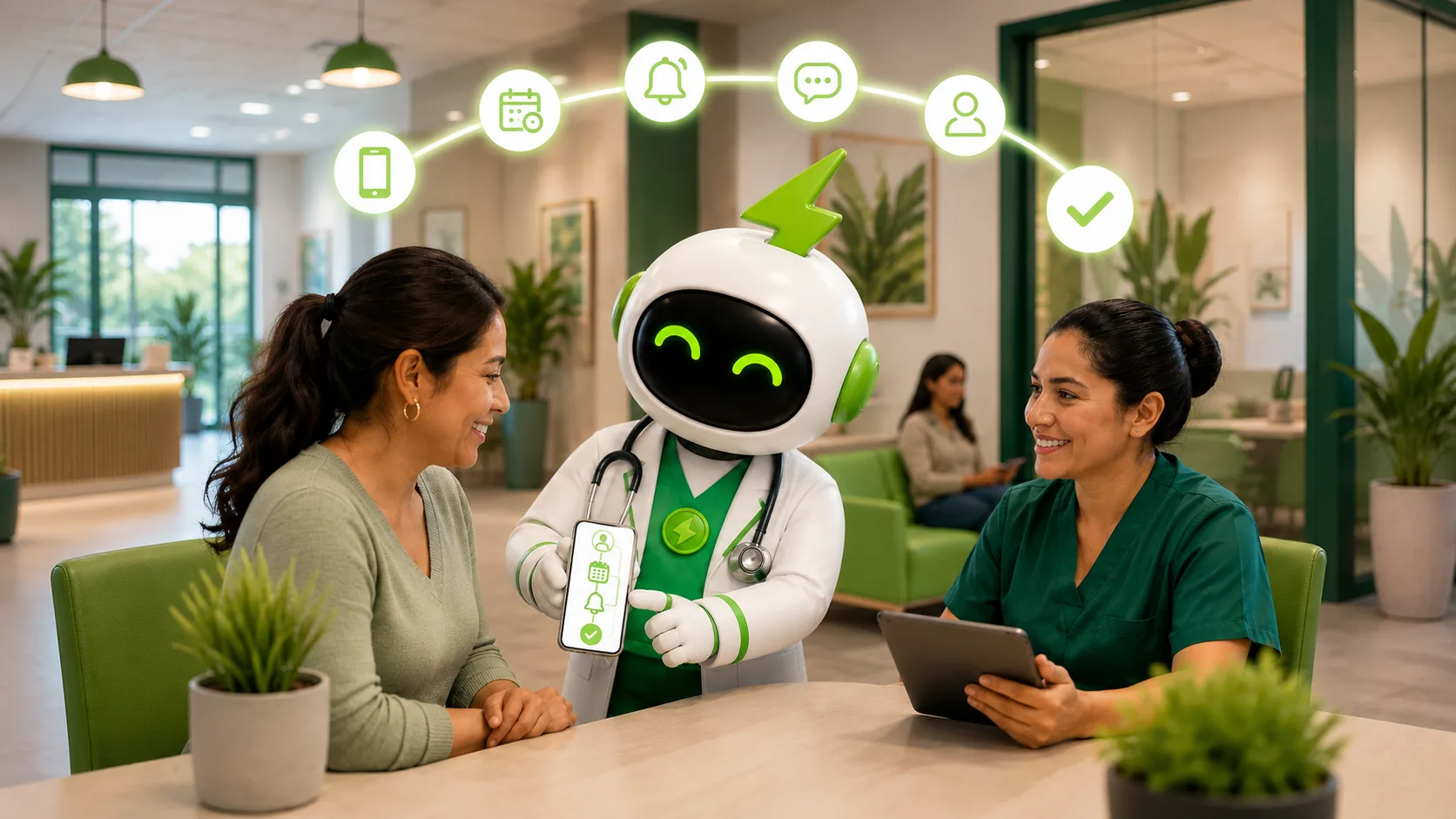
In healthcare, a schedule is not just a calendar. It is revenue, access, continuity of care and patient experience. When an appointment is missed, the institution does not only lose a time slot. It loses installed capacity, team time and operational margin.
That is why comparing COCO with traditional scheduling tools such as AgendaPro should not start with the interface. It should start with a sharper question: what does a clinic in Colombia need to operate with fewer no-shows, less friction and better financial performance?
At COCO, we answer that question from the operational layer. We combine medical scheduling software, recovered demand, multichannel reminders, HIS integration, traceability and actionable data.
1. The difference is not booking. It is recovering capacity.
Many tools can create an appointment. That helps, but it is not enough for high-demand clinics. The real impact starts when the system can also confirm, reschedule, recover canceled slots and activate patients when capacity opens.
COCO is built for that flow. Patients can self-schedule 24/7, confirm through familiar channels and receive automated reminders. The institution gets visibility into occupancy, no-shows and unmet demand.
· A booked appointment does not guarantee attendance.
· A canceled appointment should not become lost revenue.
· A waitlist should activate demand, not sit in a spreadsheet.
· A schedule should connect to operational indicators, not live alone.
2. COCO compared with a generic scheduling tool
|
Clinic need |
Traditional scheduling tool |
COCO |
|
Book appointments |
Creates time slots and reservations. |
Automates request, confirmation, rescheduling and traceability. |
|
Reduce no-shows |
Often relies on simple reminders or manual work. |
Uses multichannel confirmations, slot recovery and follow-up flows. |
|
Recover demand |
Usually does not activate unmet demand at scale. |
Activates waitlists and campaigns to fill available capacity. |
|
Connect with clinical systems |
May remain separate from the clinical workflow. |
Connects with HIS, ERP and CRM systems for operational synchronization. |
|
Measure performance |
Basic reports. |
Dashboards on occupancy, attendance, demand and operational performance. |
|
Protect patient data |
Depends on vendor maturity. |
Built around security, traceability and data governance. |
3. Interoperability: what separates a calendar from a clinical operation
A clinic does not need another isolated tool. It needs information to move correctly across scheduling, medical records, patient channels, operations and reporting.
That is why interoperability matters. HL7 FHIR includes an Appointment resource to represent healthcare bookings with participants, status, time and workflow relationships. That standard helps scheduling become part of the clinical ecosystem, not an isolated layer. See HL7 FHIR Appointment.
COCO works on that logic: connecting scheduling to real operations. This matters for clinics that work with HIS, ERP, CRM or multiple patient entry channels.
4. Security and patient data: healthcare needs more than reminders
Medical scheduling touches sensitive data. A serious platform should not only send messages. It should support privacy, traceability and access controls.
In Colombia, personal data protection is framed by Law 1581 of 2012. Internationally, standards such as ISO/IEC 27001 and references such as the HIPAA Security Rule help organize information security controls for healthcare environments.
For COCO, security is not an add-on. It is part of the operation.
5. When COCO makes sense
· Clinics with high appointment volume and saturated call centers.
· Hospitals that need to reduce no-shows without growing the administrative team.
· Healthcare providers with unmet demand and waitlists that are not activated fast enough.
· Institutions that need integration with existing systems.
· Organizations that want to combine medical scheduling software, patient engagement campaigns, queue management system and clinical OCR software.
6. When a simple scheduling tool may be enough
A simpler scheduling tool can work for low-volume operations or organizations that only need to book time slots. But when the problem is operational, not just administrative, the institution needs more than a calendar.
The question is not “Which software books appointments?”. The question is “Which system helps the clinic recover demand, reduce no-shows and operate better?”.
Conclusion
COCO does not compete only on scheduling. We compete on operational impact. We help clinics and hospitals in Colombia and LATAM turn scheduling into a driver of profitability, access and efficiency.
If the institution only needs to create appointments, a basic scheduling tool may be enough. If it needs to reduce no-shows, recover slots, integrate systems and make better decisions, COCO is a more complete option.
Frequently asked questions
What makes COCO different from a traditional scheduling tool?
COCO does not only book appointments. It automates confirmations, reminders, rescheduling, waitlists, demand recovery and operational reporting.
Is COCO useful for clinics in Colombia?
Yes. COCO is built for clinics, hospitals and healthcare providers in Colombia and LATAM that need fewer no-shows, better traceability and stronger operational control.
Does COCO integrate with clinical systems?
Yes. COCO connects with existing systems such as HIS, ERP and CRM, depending on each institution’s workflow.
Can COCO help reduce no-shows?
Yes. COCO combines multichannel reminders, confirmations, slot recovery and patient engagement campaigns to improve attendance.
What problem does COCO vs AgendaPro: what clinics in Colombia need to reduce no-shows and improve operations address?
How can it be applied in a clinic, hospital, or healthcare provider?
Which indicators should healthcare leaders track?
Do you want to activate patients and recover capacity?
See how COCO helps reach patients, fill available slots, and support continuity of care.
COCO in the press
What independent media have published on this topic.
- El TiempoClinics and hospitals grew appointment management over 24% using AI
- Diario ADNIn Colombia, under 50% of hospitals offer digital scheduling and results
- InfobaeHow AI and automation will transform clinics and hospitals in 2026
- Noticias RCNTrends that will transform clinics and hospitals in 2026
Related articles

How to Connect Scheduling to an HIS Without Replacing It
A guide to connecting medical scheduling with an HIS, clarifying ownership, and improving access without replacing existing systems.
How to Reduce Medical No-Shows with Active Confirmation
Learn how active confirmation helps clinics reduce no-shows and recover appointments before clinical capacity is lost.
How Clinics Lose Revenue and How COCO Helps Recover It
The revenue leaks behind healthcare organizations and how COCO connects its solutions to recover appointments, capacity, and efficiency in LATAM.